

Hey there, tech enthusiasts! I'm an aluminum CPU cooler supplier, and today I'm super stoked to dig deep into how the base design of an aluminum CPU cooler impacts heat transfer. Let's get right into it!
The Basics of Heat Transfer in CPU Coolers
Before we talk about the base design, let's quickly go over how heat transfer works in a CPU cooler. The main goal of a CPU cooler is to take the heat generated by the CPU and move it away as efficiently as possible. There are three main ways heat can be transferred: conduction, convection, and radiation. In a CPU cooler, conduction and convection are the big players.
Conduction is the transfer of heat between two objects that are in direct contact. In our case, it's the transfer of heat from the CPU to the base of the cooler. Convection, on the other hand, is the transfer of heat through a fluid (usually air). Once the heat is on the cooler, fans blow air over it, carrying the heat away.
Why Aluminum?
You might be wondering why we use aluminum for CPU coolers. Well, aluminum is a great choice because it's lightweight, relatively inexpensive, and has good thermal conductivity. It's not as good as copper, but it's a lot lighter and cheaper, which makes it a popular option for many CPU cooler designs.

The Impact of Base Design on Heat Transfer
Now, let's talk about how the base design of an aluminum CPU cooler affects heat transfer. There are a few key factors to consider:
Flatness and Smoothness
The flatness and smoothness of the base are crucial for good heat transfer. If the base isn't flat, there won't be full contact between the CPU and the cooler. This means that there will be air gaps, which are poor conductors of heat. As a result, the heat transfer efficiency will be reduced.
A smooth base also helps. Rough surfaces can create air pockets, even if the base is flat. These air pockets act as insulators, preventing the heat from transferring effectively. That's why we spend a lot of time ensuring that our aluminum CPU cooler bases are as flat and smooth as possible.
Surface Area
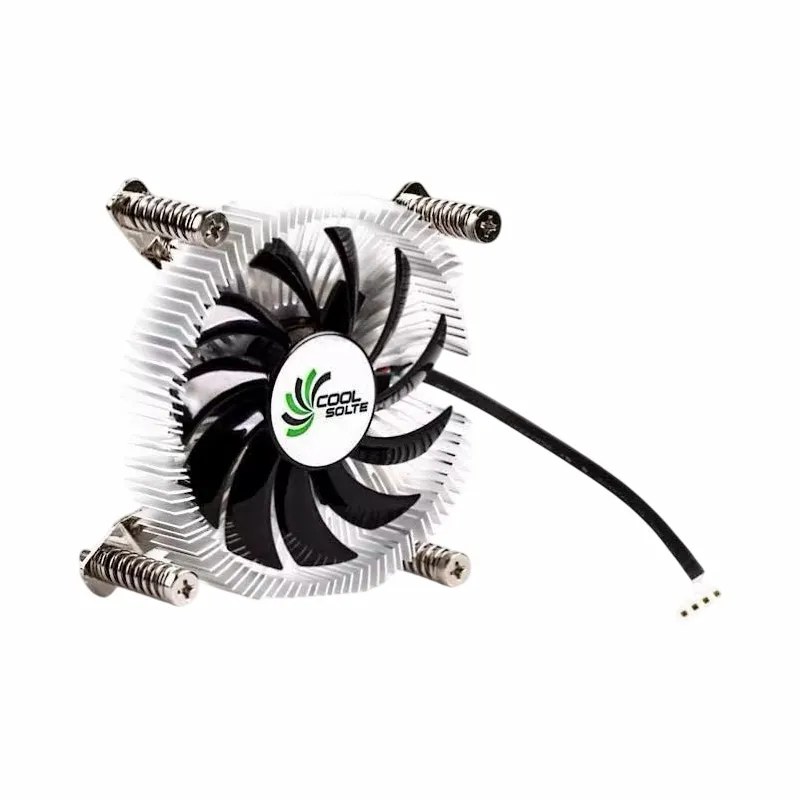
The surface area of the base also plays a big role in heat transfer. The more surface area the base has, the more heat it can absorb from the CPU. Some cooler bases have fins or other structures to increase the surface area. These fins provide more contact points for the heat to transfer from the CPU to the cooler.
For example, our Copper CPU Heatpipe Radiator for AMD Intel has a base design with carefully engineered fins that maximize the surface area. This allows for better heat absorption and transfer.
Material Thickness
The thickness of the aluminum base can affect heat transfer as well. A thicker base can hold more heat, but it might also take longer to transfer the heat to the rest of the cooler. On the other hand, a thinner base can transfer heat more quickly, but it might not be able to hold as much heat.
We've found that there's a sweet spot when it comes to base thickness. Our engineers have done a lot of testing to find the optimal thickness for our aluminum CPU coolers. This ensures that the base can absorb heat quickly and transfer it efficiently to the fins and the air.
Heatpipe Integration
Many modern CPU coolers use heatpipes to transfer heat from the base to the fins. Heatpipes are sealed tubes filled with a liquid that evaporates when it absorbs heat. The vapor then moves to a cooler part of the heatpipe, where it condenses and releases the heat.
The way the heatpipes are integrated into the base can have a big impact on heat transfer. If the heatpipes are in direct contact with the CPU through the base, they can transfer the heat more efficiently. Some base designs have the heatpipes exposed on the bottom, while others have them embedded in the base.
Our Air Cooler Fans Cooling Heat Sink for CPU uses a unique heatpipe integration design. The heatpipes are carefully placed in the base to ensure maximum contact with the CPU and efficient heat transfer.
Real-World Examples
Let's take a look at some real-world examples of how base design affects heat transfer. We've tested different base designs in our lab, and the results are pretty eye-opening.
We had two aluminum CPU coolers with similar fin designs and fan speeds. The only difference was the base design. One cooler had a flat, smooth base with a standard thickness, while the other had a base with fins and a slightly different heatpipe integration.
When we tested these coolers on the same CPU under the same conditions, the cooler with the finned base and better heatpipe integration performed significantly better. It was able to keep the CPU several degrees cooler than the other cooler.
This shows that even small changes in the base design can have a big impact on heat transfer and CPU temperatures.
Our Approach as a Supplier
As an aluminum CPU cooler supplier, we're always looking for ways to improve our base designs. We invest a lot of time and resources in research and development to find the best materials, thicknesses, and integration methods.
We also listen to our customers. If they have feedback or suggestions for improving our base designs, we take it seriously. We want to make sure that our coolers are the best on the market in terms of heat transfer performance.
Our Computer Cooler Fan with Alloy Aluminium CPU Heat Sink is a great example of our commitment to innovation. It features a state-of-the-art base design that has been optimized for maximum heat transfer.
Conclusion
In conclusion, the base design of an aluminum CPU cooler has a huge impact on heat transfer. Factors like flatness, smoothness, surface area, material thickness, and heatpipe integration all play important roles.
As a supplier, we're dedicated to creating the best base designs possible. We know that a well-designed base can make a big difference in the performance of our CPU coolers.
If you're in the market for high-quality aluminum CPU coolers, we'd love to talk to you. Whether you're a PC builder, a gamer, or a business looking for reliable cooling solutions, we have the products and expertise to meet your needs. Contact us to start a procurement discussion and find the perfect CPU cooler for your requirements.
References
- Incropera, F. P., & DeWitt, D. P. (2002). Fundamentals of Heat and Mass Transfer. Wiley.
- Bergman, T. L., Lavine, A. S., Incropera, F. P., & DeWitt, D. P. (2011). Introduction to Heat Transfer. Wiley.