

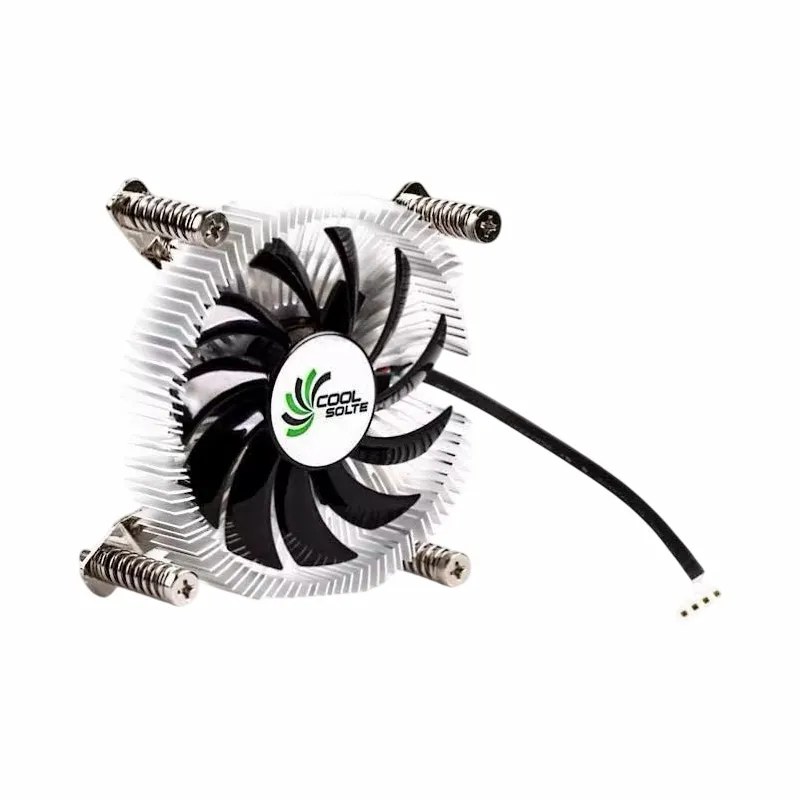
Air Cooler Fans Cooling Heat Sink for CPU
An **air cooler with fans and a heat sink** is one of the most common and effective cooling solutions for CPUs. It uses a combination of a **heat sink** and **fans** to dissipate heat generated by the CPU during operation. Here's a detailed explanation of how it works, its components, and its benefits:
Components of an Air Cooler for CPU
1. Heat Sink:
- Made of materials with high thermal conductivity, such as **aluminum** or **copper** (or a combination of both).
- Features fins or ridges to increase surface area for better heat dissipation.
- The base of the heat sink is in direct contact with the CPU (via thermal paste) to absorb heat.
2. Fans:
- Attached to the heat sink to improve airflow over the fins.
- Fans come in various sizes (e.g., 80mm, 120mm, 140mm) and speeds (measured in RPM).
- Some coolers use **dual fans** for better cooling performance.
3. Mounting Hardware:
- Includes brackets, screws, and back plates to securely attach the cooler to the CPU socket on the motherboard.
How It Works
1. The CPU generates heat during operation.
2. The heat sink absorbs the heat from the CPU through its base.
3. The heat is transferred to the fins of the heat sink.
4. The fan(s) blow air over the fins, carrying the heat away from the CPU and out of the computer case.
5. In coolers with heat pipes, the heat is quickly transferred from the CPU to the fins via the pipes, improving cooling efficiency.
Advantages of Air Coolers
1. Cost-Effective : Air coolers are generally more affordable than liquid cooling solutions.
2. Ease of Installation : Most air coolers are easy to install and require minimal maintenance.
3. Reliability : No risk of leaks (unlike liquid coolers) and fewer points of failure.
4. Performance : High-quality air coolers can provide excellent cooling performance, even for overclocked CPUs.
5. Durability : Air coolers have a long lifespan and are less prone to damage.
Maintenance Tips
1. Dust Cleaning : Regularly clean the heat sink fins and fans to prevent dust buildup, which can reduce cooling efficiency.
2. Thermal Paste Replacement : Reapply thermal paste every 1-2 years for optimal heat transfer.
3. Fan Lubrication : If the fan becomes noisy, it may need lubrication or replacement.
Conclusion
Air coolers with fans and heat sinks are a reliable, cost-effective, and efficient way to cool your CPU. They are suitable for a wide range of applications, from everyday computing to gaming and overclocking. When choosing an air cooler, consider factors like compatibility, performance, and noise levels to find the best solution for your needs.


|
Product Number: |
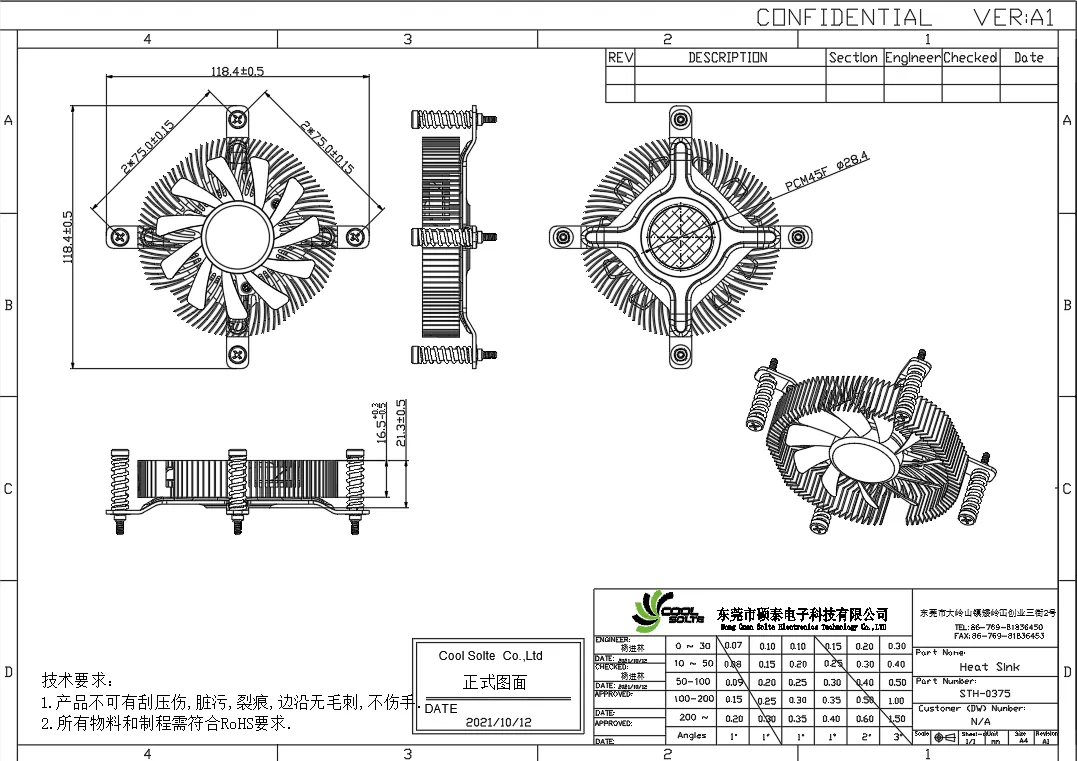
STH-0375 |
STH-0359 |
|
|
Cpu Socket: |
LGA115X |
LGA115X series |
|
|
Product Size: |
Diameter 90*21.5mm |
194.4*85*22mm |
|
|
Radiator Material: |
Aluminum, Copper |
Aluminum, Copper Tube |
|
|
Fan Size: |
8010 |
8020 |
|
|
Rated Voltage: |
12V |
12V |
|
|
Bearing Type: |
Double Ball Fan |
Hydraulic Fan/Double Ball Fan |
|
|
Fan Speed: |
3000RPM |
3500RPM |
|
|
Fan Interface: |
4 PIN |
4 PIN |
|
|
TDP: |
65W |
65W |
Hot Tags: air cooler fans cooling heat sink for CPU, China air cooler fans cooling heat sink for CPU manufacturers, suppliers, factory, Aluminum CPU Cooler, OPS heat sink for CPU devices, low profile aio cooler, Copper CPU Heatpipe Radiator For AMD Intel, ops cpu heat sink, Air Cooler Fans Cooling Heat Sink For CPU


