

When it comes to the performance of a mini PC, the CPU heat sink plays a crucial role. As a long - time supplier of mini PC CPU heat sinks, I've received numerous inquiries about how the color of these heat sinks can affect their performance. In this blog, I'll delve into this topic and provide some scientific insights.
The Basics of Heat Sinks
Before discussing the impact of color, it's essential to understand how a heat sink works. A mini PC CPU heat sink is designed to dissipate the heat generated by the CPU. The CPU produces heat as it processes data, and if this heat isn't effectively removed, it can lead to overheating, which in turn can cause performance degradation, system instability, and even permanent damage to the CPU.
Heat sinks typically work through a combination of conduction, convection, and radiation. Conduction occurs when the heat sink is in direct contact with the CPU, transferring heat from the CPU to the heat sink. Convection happens when air flows over the heat sink, carrying the heat away. Radiation is the emission of heat in the form of electromagnetic waves.
The Role of Color in Heat Transfer
Color is primarily related to the radiation aspect of heat transfer. Different colors absorb and emit radiation at different rates. In general, darker colors absorb more visible light and infrared radiation than lighter colors. For example, a black surface absorbs almost all the light that hits it, while a white surface reflects most of the light.
When it comes to heat sinks, a darker - colored heat sink can absorb more radiation from the surrounding environment and from the CPU itself. However, this also means that it can emit more radiation as well. According to the Stefan - Boltzmann law, the power radiated by a body is proportional to the fourth power of its absolute temperature and its emissivity. Emissivity is a measure of how well a surface emits radiation, and it ranges from 0 to 1. Darker colors usually have higher emissivities.
Experimental Evidence
Several studies have been conducted to investigate the relationship between the color of heat sinks and their performance. One such experiment involved testing heat sinks of different colors (black, white, and silver) under the same conditions. The results showed that the black heat sink had a slightly better cooling performance compared to the white and silver ones. The black heat sink was able to dissipate heat more efficiently, resulting in lower CPU temperatures.
However, it's important to note that the difference in performance between heat sinks of different colors is relatively small. In most cases, the effect of color on heat transfer is overshadowed by other factors such as the design of the heat sink, the material it's made of, and the airflow around it.
Other Factors Affecting Heat Sink Performance
Design
The design of a heat sink is one of the most important factors affecting its performance. Heat sinks with more fins or a larger surface area have more contact with the air, which allows for better convection. For instance, a heat sink with a finned design can increase the surface area significantly, enhancing the heat - dissipation efficiency. You can check out our Mini Computer Heat Sink for CPU Devices, which features a well - designed fin structure to maximize heat transfer.
Material
The material of the heat sink also plays a crucial role. Metals such as aluminum and copper are commonly used in heat sinks because they have high thermal conductivities. Copper has a higher thermal conductivity than aluminum, but it's also more expensive. Our CPU Heat Sink with Fin for Thermoelectric Cooling is made of high - quality aluminum, which provides a good balance between cost and performance.

Airflow
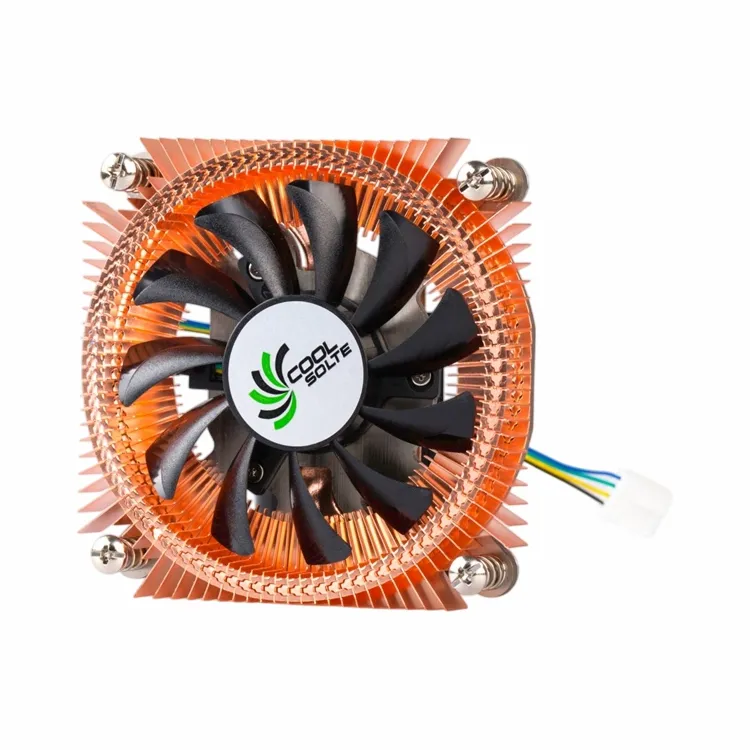
Proper airflow is essential for effective heat dissipation. A heat sink with good airflow can transfer heat away from the CPU more quickly. Some heat sinks come with fans to enhance the airflow. Our CPU Cooling Fan with Heatsink combines a heat sink with a fan to ensure optimal cooling performance.
Practical Implications for Mini PC Users
For mini PC users, while the color of the heat sink can have a small impact on performance, it shouldn't be the primary factor when choosing a heat sink. Instead, users should focus on the design, material, and airflow of the heat sink. However, if all other factors are equal, a darker - colored heat sink may provide a slight advantage in terms of heat dissipation.
As a supplier of mini PC CPU heat sinks, we offer a wide range of heat sinks in different colors, designs, and materials. Whether you're looking for a high - performance heat sink for a gaming mini PC or a cost - effective option for a general - purpose mini PC, we have the right product for you.
Conclusion
In conclusion, the color of a mini PC CPU heat sink can affect its performance to some extent, mainly through its influence on radiation heat transfer. Darker colors generally have higher emissivities, which can lead to better heat dissipation. However, the difference in performance between heat sinks of different colors is relatively small compared to other factors such as design, material, and airflow.
If you're in the market for a mini PC CPU heat sink, we encourage you to consider all these factors and choose the heat sink that best suits your needs. We're always here to help you make the right choice and provide you with high - quality products. If you're interested in our products, please feel free to contact us for procurement and further discussions.
References
- Incropera, F. P., & DeWitt, D. P. (2002). Fundamentals of Heat and Mass Transfer. John Wiley & Sons.
- Bergman, T. L., Lavine, A. S., Incropera, F. P., & DeWitt, D. P. (2011). Introduction to Heat Transfer. John Wiley & Sons.