

In the ever - evolving world of computer hardware, the performance of a CPU is a critical factor for both casual users and high - end enthusiasts. As a leading supplier of aluminum CPU coolers, I often encounter the question: Can an aluminum CPU cooler handle high - end CPUs? This blog post aims to delve into this topic, exploring the capabilities, limitations, and considerations of using aluminum CPU coolers with high - end processors.
Understanding High - End CPUs
High - end CPUs are designed to deliver exceptional performance, whether it's for gaming, content creation, or professional work. These processors typically have a high number of cores, high clock speeds, and are capable of handling complex tasks with ease. However, this high - performance comes at a cost: heat generation. High - end CPUs can produce a significant amount of heat, especially when under heavy load. For example, some of the latest Intel Core i9 and AMD Ryzen 9 series processors can reach power consumption levels of over 100 watts during intensive tasks. This heat needs to be dissipated effectively to maintain optimal performance and prevent overheating, which can lead to thermal throttling and reduced lifespan of the CPU.
The Role of CPU Coolers
CPU coolers are essential components in a computer system. Their primary function is to transfer the heat generated by the CPU to the surrounding environment. There are two main types of CPU coolers: air coolers and liquid coolers. Air coolers, which often use aluminum as a key material, work by using a heat sink to absorb the heat from the CPU and then dissipate it through a fan. Liquid coolers, on the other hand, use a liquid coolant to transfer heat from the CPU to a radiator, where it is then dissipated.
Advantages of Aluminum in CPU Coolers
Aluminum is a popular material for CPU coolers for several reasons. Firstly, aluminum is lightweight. This is an important factor, especially for laptops and small form - factor PCs, where weight is a concern. A lighter cooler puts less stress on the motherboard and CPU socket, reducing the risk of damage. Secondly, aluminum is relatively inexpensive compared to other metals, such as copper. This makes aluminum CPU coolers more cost - effective, which is appealing to budget - conscious consumers. Thirdly, aluminum has good thermal conductivity. While it is not as good as copper, modern aluminum alloys can still transfer heat efficiently. The surface area of the heat sink can be increased through fin design, which helps to compensate for the slightly lower thermal conductivity.
Can Aluminum CPU Coolers Handle High - End CPUs?
The answer to this question is not straightforward. In some cases, aluminum CPU coolers can handle high - end CPUs effectively. For less demanding high - end CPUs or when the computer is used for tasks that do not put the CPU under constant heavy load, an aluminum CPU cooler may be sufficient. For example, if you are using a high - end CPU mainly for web browsing, word processing, and light gaming, an aluminum cooler can keep the CPU at a reasonable temperature.
However, for more demanding tasks such as overclocking, 3D rendering, and high - end gaming, the situation becomes more complex. Overclocking a high - end CPU significantly increases its power consumption and heat generation. In such cases, the thermal performance of an aluminum CPU cooler may be limited. The relatively lower thermal conductivity of aluminum compared to copper means that it may not be able to transfer heat as quickly, leading to higher CPU temperatures.
Factors Affecting the Performance of Aluminum CPU Coolers
Several factors can affect the ability of an aluminum CPU cooler to handle high - end CPUs. The design of the heat sink is crucial. A well - designed heat sink with a large surface area and efficient fin design can increase the heat dissipation capacity. The number and speed of the fans also play a significant role. More fans or higher - speed fans can increase the airflow over the heat sink, which helps to remove heat more effectively. Additionally, the quality of the thermal paste used between the CPU and the cooler can impact heat transfer. A high - quality thermal paste can fill in the microscopic gaps between the CPU and the cooler, improving the contact and heat transfer efficiency.
Our Aluminum CPU Cooler Offerings
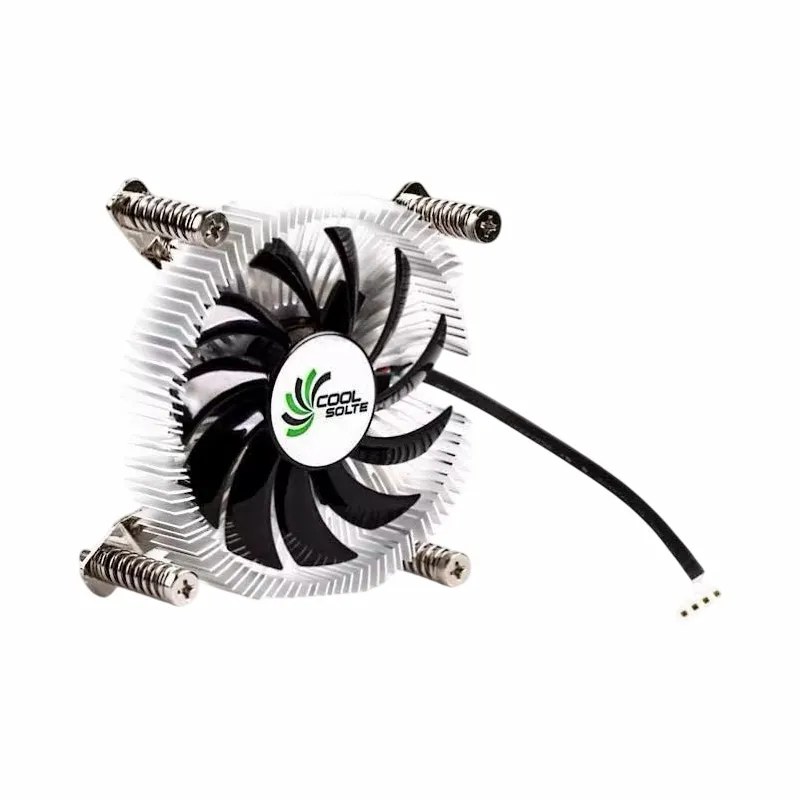
As a supplier of aluminum CPU coolers, we offer a range of products that are designed to meet different needs. Our Air Cooler Fans Cooling Heat Sink for CPU is a great option for general - purpose use. It features a lightweight aluminum heat sink and a high - speed fan, providing efficient cooling at an affordable price. For users who need a bit more performance, our Copper CPU Heatpipe Radiator for AMD Intel combines the benefits of copper heat pipes with an aluminum radiator. The copper heat pipes help to transfer heat more quickly from the CPU to the aluminum radiator, improving the overall cooling performance. Our Computer Cooler Fan with Alloy Aluminium CPU Heat Sink is another excellent choice. It uses an alloy aluminum heat sink, which has enhanced thermal properties compared to regular aluminum, and a powerful fan to ensure effective heat dissipation.

Making the Right Choice
When deciding whether an aluminum CPU cooler can handle a high - end CPU, it is important to consider your specific needs. If you are a casual user who mainly uses the computer for basic tasks, an aluminum CPU cooler may be sufficient. However, if you are a power user who engages in intensive tasks such as overclocking or 3D rendering, you may need to consider a more powerful cooling solution, such as a liquid cooler or a high - end air cooler with copper heat pipes.
Contact Us for Procurement
If you are interested in our aluminum CPU coolers and would like to discuss procurement options, please feel free to reach out. We are committed to providing high - quality products and excellent customer service. Our team of experts can help you choose the right cooler for your specific requirements and provide you with competitive pricing.
References
- "Thermal Management in High - Performance Computing" by X. Zhang, published in the Journal of Thermal Engineering.
- "Materials for CPU Cooling Applications" by Y. Wang, presented at the International Conference on Advanced Materials and Manufacturing Technology.
- Manufacturer specifications of Intel Core i9 and AMD Ryzen 9 series CPUs.