

When it comes to CPU cooling solutions, the choice between aluminum and copper CPU coolers is a crucial decision for many computer enthusiasts and professionals. As a supplier of aluminum CPU coolers, I'm often asked whether aluminum coolers are better than their copper counterparts. In this blog post, I'll delve into the characteristics, advantages, and disadvantages of both aluminum and copper CPU coolers to help you make an informed decision.
Thermal Conductivity
One of the most important factors in CPU cooling is thermal conductivity. Thermal conductivity is a measure of a material's ability to conduct heat. The higher the thermal conductivity, the more efficiently the material can transfer heat away from the CPU.
Copper is well - known for its excellent thermal conductivity. With a thermal conductivity of approximately 401 W/(m·K), copper can quickly absorb heat from the CPU and transfer it to the fins of the cooler, where it can be dissipated into the surrounding air. This makes copper coolers highly effective at handling high - power CPUs that generate a significant amount of heat.
On the other hand, aluminum has a lower thermal conductivity of around 205 W/(m·K). This means that, in theory, copper should be better at conducting heat than aluminum. However, the difference in thermal conductivity doesn't always translate directly into a significant difference in cooling performance in real - world scenarios.
Weight and Cost
Weight is another factor to consider when choosing a CPU cooler. Copper is a dense metal, and copper coolers tend to be heavier than aluminum ones. This can be a concern, especially for laptops or small form - factor PCs where weight is a critical consideration. A heavy cooler may also put additional stress on the motherboard, potentially leading to long - term damage.
In terms of cost, aluminum is generally more affordable than copper. Aluminum is a more abundant metal, and the manufacturing process for aluminum coolers is often less complex and expensive. This makes aluminum CPU coolers a cost - effective option for budget - conscious consumers or those who don't require the highest - end cooling performance.
Heat Dissipation Design
The design of the cooler also plays a significant role in its cooling performance. Both aluminum and copper coolers can be designed with fins, heat pipes, and fans to enhance heat dissipation.
Aluminum coolers are often used in combination with heat pipes. Heat pipes are sealed tubes filled with a working fluid that can transfer heat more efficiently than solid metal. By using heat pipes in an aluminum cooler, the overall heat transfer performance can be significantly improved. For example, our Computer Cooler Fan with Alloy Aluminium CPU Heat Sink uses advanced heat pipe technology to enhance the heat dissipation of the aluminum heat sink.
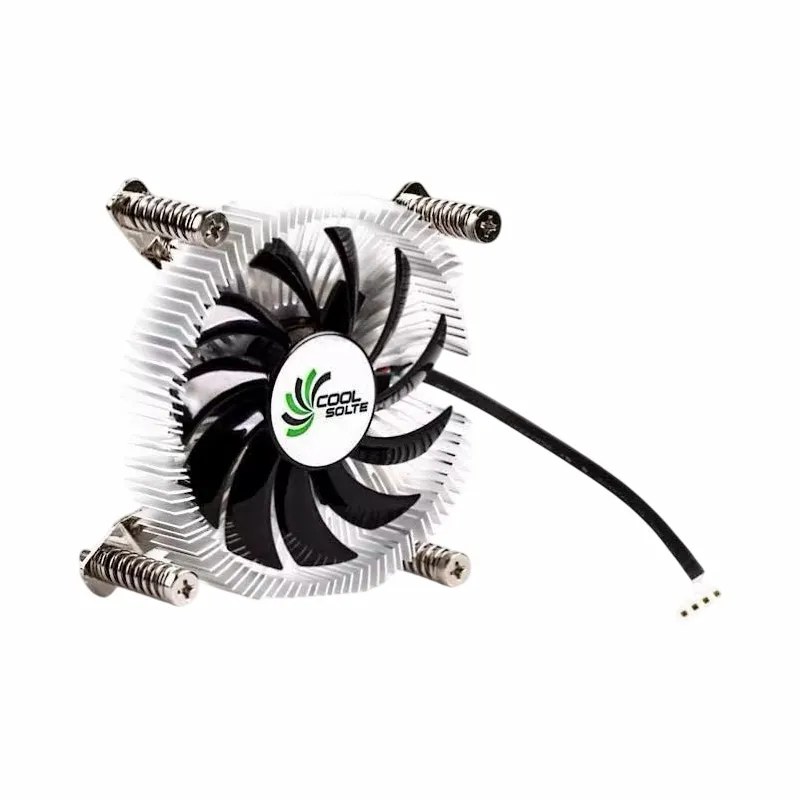
Copper coolers can also benefit from heat pipe technology, but their higher thermal conductivity means that they can sometimes achieve good cooling performance even without as many heat pipes. The Copper CPU Heatpipe Radiator for AMD Intel is a prime example of a high - performance copper cooler that combines the excellent thermal conductivity of copper with heat pipe technology for efficient heat transfer.
Corrosion Resistance
Corrosion can be a problem for CPU coolers, especially in environments with high humidity or exposure to certain chemicals. Aluminum has a natural oxide layer that forms on its surface, which provides some level of corrosion resistance. This makes aluminum coolers more suitable for use in harsh environments.
Copper, while generally more resistant to corrosion than many other metals, can still corrode over time, especially when exposed to moisture and certain acids. If a copper cooler is not properly coated or treated, corrosion can reduce its thermal conductivity and overall performance.
Noise Level
The noise level of a CPU cooler is an important consideration, especially for those who use their computers in quiet environments such as home offices or recording studios. The fan speed and design of the cooler can significantly affect the noise level.
Aluminum coolers, due to their lower weight and potentially lower cost, can sometimes be paired with smaller and quieter fans. Our Air Cooler Fans Cooling Heat Sink for CPU is designed with a focus on quiet operation, making it a great choice for users who value a quiet computing environment.
Copper coolers may require more powerful fans to achieve the same level of cooling performance, which can result in higher noise levels. However, with advancements in fan technology, many copper coolers are now available with quiet - running fans.
Application Scenarios
The choice between aluminum and copper CPU coolers also depends on the specific application.

For general - purpose computing, such as web browsing, word processing, and watching videos, an aluminum CPU cooler is usually sufficient. These tasks don't put a heavy load on the CPU, so the lower thermal conductivity of aluminum is not a significant drawback.
For high - performance applications such as gaming, video editing, and 3D rendering, a copper cooler may be a better choice. These applications generate a large amount of heat, and the higher thermal conductivity of copper can help keep the CPU temperature under control. However, if you are on a budget or have space and weight constraints, a well - designed aluminum cooler with heat pipes can also provide satisfactory cooling performance.
Conclusion
In conclusion, whether aluminum CPU coolers are better than copper ones depends on various factors. Aluminum coolers offer advantages in terms of weight, cost, corrosion resistance, and potentially lower noise levels. They are a great choice for budget - conscious consumers, general - purpose computing, and applications where weight and noise are important considerations.
On the other hand, copper coolers have superior thermal conductivity, which makes them ideal for high - performance applications that generate a large amount of heat. However, they are heavier and more expensive.
As a supplier of aluminum CPU coolers, I believe that our products offer a great balance of performance, cost, and reliability. We have a wide range of aluminum CPU coolers that are suitable for different applications and user requirements.
If you are interested in our aluminum CPU coolers or have any questions about CPU cooling solutions, please feel free to contact us for procurement and further discussions. We are committed to providing you with the best products and services to meet your needs.
References
- Incropera, F. P., DeWitt, D. P., Bergman, T. L., & Lavine, A. S. (2007). Fundamentals of Heat and Mass Transfer. Wiley.
- Madhusudana, C. V. (2006). Heat Pipes: Theory, Design, and Applications. Springer.