

When it comes to ensuring the optimal performance of OPS CPUs, choosing the right heat sink is crucial. Among the various options available, single - fan and dual - fan OPS CPU heat sinks are two popular choices. As an OPS CPU heat sink supplier, I've had extensive experience with both types and can provide in - depth insights into which one might be better for different scenarios.
Understanding the Basics of OPS CPU Heat Sinks
Before delving into the comparison between single - fan and dual - fan heat sinks, it's essential to understand the fundamental role of an OPS CPU heat sink. The main function of a CPU heat sink is to dissipate the heat generated by the CPU during its operation. If the CPU overheats, it can lead to reduced performance, system instability, and even permanent damage.
Heat sinks work by transferring the heat from the CPU to the surrounding air. They typically consist of a base that makes contact with the CPU, heat pipes to transfer heat, and fins to increase the surface area for better heat dissipation. Fans are then used to blow air over the fins, enhancing the heat transfer process.
Single - Fan OPS CPU Heat Sinks
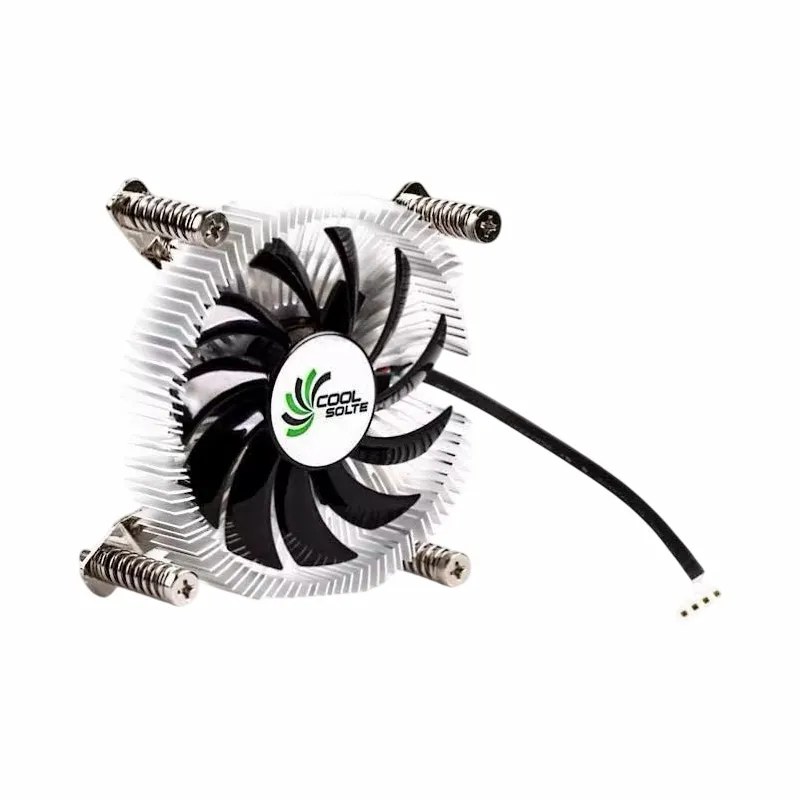
Single - fan OPS CPU heat sinks are characterized by having a single fan attached to the heat sink assembly. These heat sinks are generally more compact and less expensive compared to their dual - fan counterparts.
Advantages
- Space - Saving: In environments where space is limited, such as small form - factor computers or embedded systems, single - fan heat sinks are an ideal choice. Their compact design allows them to fit into tight spaces without taking up too much room.
- Lower Cost: From a cost - perspective, single - fan heat sinks are more budget - friendly. This makes them a popular option for cost - sensitive projects or when you need to equip multiple systems with heat sinks.
- Quiet Operation: Since there is only one fan, single - fan heat sinks tend to produce less noise. This is beneficial for applications where noise levels need to be kept to a minimum, such as in home theaters or office environments.
Disadvantages
- Limited Cooling Capacity: The most significant drawback of single - fan heat sinks is their relatively limited cooling capacity. They may struggle to keep up with high - performance CPUs that generate a large amount of heat. In such cases, the CPU temperature may rise, leading to thermal throttling and reduced performance.
- Less Airflow Distribution: With only one fan, the airflow distribution over the heat sink fins may not be as uniform as in dual - fan setups. This can result in some areas of the heat sink not being cooled as effectively, reducing the overall efficiency of the heat dissipation process.
Dual - Fan OPS CPU Heat Sinks
Dual - fan OPS CPU heat sinks, as the name suggests, feature two fans attached to the heat sink assembly. These heat sinks are designed to provide enhanced cooling performance.
Advantages
- High Cooling Capacity: The addition of a second fan significantly increases the cooling capacity of the heat sink. This makes dual - fan heat sinks suitable for high - performance CPUs that require efficient heat dissipation to maintain optimal performance.
- Better Airflow Distribution: Two fans can provide more uniform airflow over the heat sink fins. This ensures that all areas of the heat sink are effectively cooled, improving the overall heat transfer efficiency.
- Redundancy: In case one fan fails, the other fan can still provide some level of cooling. This adds a layer of reliability to the system, especially in critical applications where system downtime is not acceptable.
Disadvantages
- Larger Size: Dual - fan heat sinks are generally larger and bulkier than single - fan heat sinks. This can be a problem in applications where space is limited.
- Higher Cost: The additional fan and the associated components increase the cost of dual - fan heat sinks. This may not be feasible for projects with a tight budget.
- Increased Noise: With two fans running, dual - fan heat sinks tend to produce more noise compared to single - fan heat sinks. This can be a concern in noise - sensitive environments.
Factors to Consider When Choosing
When deciding between a single - fan and a dual - fan OPS CPU heat sink, several factors need to be taken into account:
CPU Power and Heat Output
The power consumption and heat output of the CPU are the most important factors. High - performance CPUs with a high TDP (Thermal Design Power) will require a heat sink with a higher cooling capacity, such as a dual - fan heat sink. On the other hand, low - power CPUs can usually be adequately cooled by a single - fan heat sink.
Available Space
As mentioned earlier, the available space in the system is a crucial consideration. If the system has limited space, a single - fan heat sink may be the only viable option. However, if there is enough space, a dual - fan heat sink can provide better cooling performance.

Budget
Budget constraints can also play a significant role in the decision - making process. If cost is a major concern, a single - fan heat sink may be the more practical choice. But if you can afford to invest in better cooling performance, a dual - fan heat sink is worth considering.
Noise Sensitivity
The noise level of the heat sink is important, especially in environments where noise can be a distraction. If noise is a concern, a single - fan heat sink may be preferable due to its quieter operation.
Our Product Offerings
As an OPS CPU heat sink supplier, we offer a wide range of single - fan and dual - fan heat sinks to meet the diverse needs of our customers.
Our Copper CPU Heatpipe Radiator for AMD Intel is a high - quality single - fan heat sink. It features a copper base and heat pipes for efficient heat transfer, and its compact design makes it suitable for various applications.
For those who need more cooling power, our Computer Cooler Fan with Alloy Aluminium CPU Heat Sink is a dual - fan heat sink. It is made of alloy aluminium, which provides excellent heat dissipation properties, and the two fans ensure uniform airflow and high cooling capacity.
We also offer the Air Cooler Fans Cooling Heat Sink for CPU, which is available in both single - fan and dual - fan configurations. This heat sink is designed to provide reliable cooling for a wide range of CPUs.
Conclusion
In conclusion, there is no one - size - fits - all answer to the question of whether a single - fan or a dual - fan OPS CPU heat sink is better. It depends on various factors such as CPU power, available space, budget, and noise sensitivity.
Single - fan heat sinks are a great choice for low - power CPUs, limited - space applications, and budget - conscious projects. They offer a compact and quiet solution with a lower cost. On the other hand, dual - fan heat sinks are more suitable for high - performance CPUs, applications that require high - efficiency cooling, and where reliability is a priority.
If you are in the market for an OPS CPU heat sink and need help choosing the right one for your specific requirements, please feel free to contact us. We have a team of experts who can provide you with professional advice and guidance. We look forward to discussing your needs and helping you find the perfect heat sink solution.
References
- "Thermal Management for Electronic Systems" by Ali Boroushaki
- "Heat Transfer in Microelectronic Equipment" by Andrew D. Kraus