

The heat transfer coefficient plays a pivotal role in the performance of an OPS (Open Pluggable Specification) CPU heat sink. As a supplier of OPS CPU heat sinks, I've witnessed firsthand how this seemingly technical parameter can significantly impact the efficiency and longevity of computer systems. In this blog, I'll delve into the significance of the heat transfer coefficient and explain why it matters so much in the world of CPU cooling.
Understanding the Heat Transfer Coefficient
Before we explore the significance of the heat transfer coefficient, let's first understand what it is. In simple terms, the heat transfer coefficient (h) is a measure of how effectively heat can be transferred from one medium to another. In the context of an OPS CPU heat sink, it represents the ability of the heat sink to transfer heat from the CPU to the surrounding environment.
The heat transfer coefficient is influenced by several factors, including the material properties of the heat sink, the surface area available for heat transfer, the velocity of the cooling fluid (usually air), and the temperature difference between the CPU and the environment. A higher heat transfer coefficient means that heat can be transferred more quickly and efficiently, resulting in better cooling performance.
Importance in OPS CPU Heat Sinks
1. Efficient Heat Dissipation
The primary function of an OPS CPU heat sink is to dissipate the heat generated by the CPU. A high heat transfer coefficient ensures that the heat can be transferred rapidly from the CPU to the heat sink and then to the surrounding air. This efficient heat dissipation is crucial for maintaining the CPU at a safe operating temperature. If the heat cannot be removed quickly enough, the CPU can overheat, leading to reduced performance, system instability, and even permanent damage.
For example, consider our Computer Cooler Fan with Alloy Aluminium CPU Heat Sink. The alloy aluminium material used in this heat sink has excellent thermal conductivity, which contributes to a relatively high heat transfer coefficient. Combined with a well - designed fan that increases the air velocity over the heat sink, it can effectively transfer the heat from the CPU to the surrounding environment, ensuring optimal CPU performance.
2. Energy Efficiency
In addition to efficient heat dissipation, a high heat transfer coefficient can also contribute to energy efficiency. When the heat sink can transfer heat more effectively, it requires less energy to maintain the desired cooling effect. This is especially important in data centers and other large - scale computing environments where energy consumption is a significant concern.
For instance, our Copper CPU Heatpipe Radiator for AMD Intel uses copper heat pipes to enhance the heat transfer. Copper has a high thermal conductivity, which means that it can transfer heat more efficiently compared to other materials. As a result, the cooling system doesn't need to work as hard to keep the CPU cool, leading to lower energy consumption.
3. Longevity of Components
Overheating is one of the main causes of component failure in electronic devices. By ensuring efficient heat transfer, a high heat transfer coefficient can help extend the lifespan of the CPU and other associated components. When the CPU operates at a lower temperature, it experiences less stress and wear, reducing the likelihood of premature failure.
Our Air Cooler Fans Cooling Heat Sink for CPU is designed to provide effective cooling, thanks to its optimized heat transfer coefficient. By keeping the CPU within its recommended temperature range, it helps protect the CPU and other sensitive components from damage, increasing the overall reliability and longevity of the computer system.
Factors Affecting the Heat Transfer Coefficient in OPS CPU Heat Sinks
1. Material Selection
The choice of material for the heat sink is one of the most important factors affecting the heat transfer coefficient. Metals such as aluminium and copper are commonly used in heat sinks due to their high thermal conductivity. Aluminium is lightweight and relatively inexpensive, making it a popular choice for many applications. Copper, on the other hand, has an even higher thermal conductivity but is more expensive and heavier.

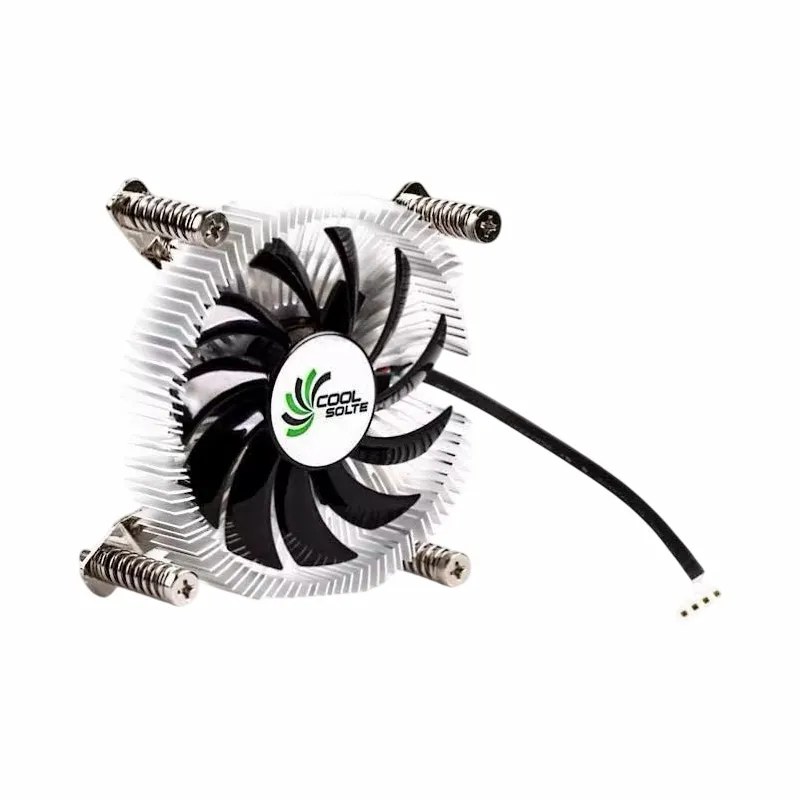
In our product range, we carefully select the materials based on the specific requirements of the application. For applications where cost is a major concern, we may use aluminium heat sinks. For applications that require higher heat transfer performance, we offer copper heat sinks or hybrid heat sinks that combine the benefits of both materials.
2. Surface Area
The surface area available for heat transfer also has a significant impact on the heat transfer coefficient. A larger surface area allows for more contact between the heat sink and the cooling fluid (air), increasing the rate of heat transfer. Heat sinks are often designed with fins or other structures to increase their surface area.
Our heat sinks are designed with carefully engineered fin structures to maximize the surface area without significantly increasing the size or weight of the heat sink. This design approach helps to improve the heat transfer coefficient and enhance the overall cooling performance.
3. Airflow
The velocity and direction of the airflow over the heat sink are crucial for effective heat transfer. A higher airflow velocity can increase the heat transfer coefficient by reducing the thickness of the boundary layer of air around the heat sink. This allows for more efficient heat exchange between the heat sink and the air.
We pay close attention to the airflow design in our heat sinks. Our fans are carefully selected and positioned to ensure optimal airflow over the heat sink. We also conduct extensive testing to optimize the airflow patterns and ensure that the heat sink can achieve the best possible cooling performance under different conditions.
Conclusion
In conclusion, the heat transfer coefficient is of utmost importance in OPS CPU heat sinks. It directly affects the efficiency of heat dissipation, energy consumption, and the longevity of computer components. As an OPS CPU heat sink supplier, we are committed to designing and manufacturing heat sinks with high heat transfer coefficients to meet the diverse needs of our customers.
If you are in the market for high - quality OPS CPU heat sinks, we invite you to contact us for procurement and further discussions. Our team of experts is ready to assist you in selecting the most suitable heat sink for your specific application.
References
- Incropera, F. P., & Dewitt, D. P. (2001). Fundamentals of Heat and Mass Transfer. John Wiley & Sons.
- Holman, J. P. (2002). Heat Transfer. McGraw - Hill.