

Hey there, tech enthusiasts! As a supplier of Aluminum CPU coolers, I've seen firsthand how crucial every little detail is when it comes to keeping your CPU running cool. One of those details that often gets overlooked but plays a huge role is the fin density in an aluminum CPU cooler. So, let's dive into why fin density is such a big deal.
First off, what exactly is fin density? Well, it's pretty simple. Fin density refers to the number of fins per unit length in a CPU cooler. In other words, it's how closely packed those little fins are. You can think of it like the teeth on a comb. If the teeth are close together, that's a high fin density. If they're spread out, it's a low fin density.
Now, why does this matter? The main reason is heat transfer. The fins on a CPU cooler are designed to increase the surface area available for heat dissipation. When your CPU generates heat, it's transferred to the base of the cooler and then spread out across the fins. The more surface area there is, the more heat can be transferred from the fins to the surrounding air. This is where fin density comes in.
A higher fin density means more fins in a given space, which translates to a larger surface area. With more surface area, there's more room for heat to escape. It's like having a bigger window to let the hot air out of a stuffy room. The more open space you have, the faster the heat can get out.
But it's not just about having a lot of fins. The spacing between the fins also matters. If the fins are too close together, it can create a problem called airflow restriction. This is when the air has a hard time getting through the fins. It's like trying to push a thick liquid through a tiny straw. The air can't move freely, which means it can't carry away the heat as effectively.
On the other hand, if the fin density is too low, there won't be enough surface area for efficient heat transfer. It's like trying to cool a large room with a small fan. You might get some air moving, but it won't be enough to make a significant difference in the temperature.
So, finding the right balance is key. A good fin density will provide enough surface area for heat transfer without causing too much airflow restriction. This is where our expertise as an Aluminum CPU cooler supplier comes in. We've spent years researching and testing different fin densities to find the optimal balance for our coolers.
Another factor to consider is the type of cooling system you're using. For example, if you're using a liquid cooling system, the fin density requirements might be different than if you're using an air cooling system. Liquid cooling systems are generally more efficient at transferring heat, so they might be able to handle a higher fin density without as much airflow restriction.
Air cooling systems, on the other hand, rely more on the movement of air to carry away the heat. So, they need a fin density that allows for good airflow. That's why we offer a variety of Aluminum CPU coolers with different fin densities to suit different cooling needs.
Let's talk about some of the products we offer. We have the Copper CPU Heatpipe Radiator for AMD Intel. This radiator features a carefully designed fin density that provides excellent heat transfer while maintaining good airflow. The copper heatpipes work together with the aluminum fins to quickly transfer heat away from the CPU.
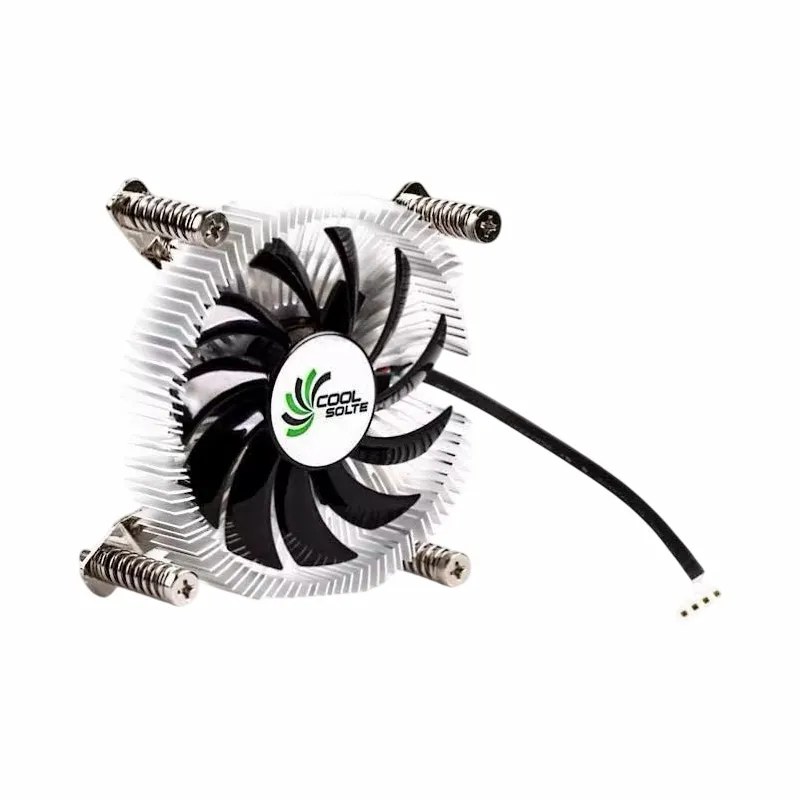

We also have the Air Cooler Fans Cooling Heat Sink for CPU. This cooler is designed to provide efficient cooling using a combination of high-quality fans and a well-engineered fin design. The fin density is optimized to ensure that the fans can push air through the fins easily, carrying away the heat in the process.
And then there's the Computer Cooler Fan with Alloy Aluminium CPU Heat Sink. This cooler combines the benefits of alloy aluminum and a smart fin density to deliver reliable cooling performance. The alloy aluminum construction is lightweight and durable, while the fin design helps to maximize heat dissipation.
In addition to heat transfer and airflow, fin density can also affect the noise level of your CPU cooler. A cooler with a high fin density and good airflow design can operate more quietly because the air can move through the fins smoothly. On the other hand, a cooler with a poor fin design and airflow restriction might require the fans to work harder, which can lead to more noise.
When choosing a CPU cooler, it's important to consider your specific needs. If you have a high-performance CPU that generates a lot of heat, you might want to look for a cooler with a higher fin density. But if you're more concerned about noise or have a system with limited airflow, a cooler with a lower fin density might be a better choice.
As a supplier, we understand that every customer is different. That's why we offer a range of Aluminum CPU coolers with different fin densities and designs. Whether you're a gamer, a content creator, or just someone who wants to keep their computer running cool, we have a solution for you.
If you're interested in learning more about our products or have any questions about fin density or CPU cooling in general, don't hesitate to reach out. We're here to help you find the perfect cooler for your needs. You can explore our product range on our website and see for yourself the quality and performance of our Aluminum CPU coolers.
In conclusion, fin density is a critical factor in the performance of an Aluminum CPU cooler. It affects heat transfer, airflow, and noise level, among other things. By choosing a cooler with the right fin density, you can ensure that your CPU stays cool and your system runs smoothly. So, take the time to consider your options and make an informed decision. And if you need any assistance along the way, we're just a message away.
References:
- Principles of Heat Transfer by Frank Kreith and Mark Bohn
- Thermal Design of Electronic Equipment by R.K. Shah and D.P. Sekulic