

Hey there, tech enthusiasts! As a supplier of low profile AIO coolers, I'm super stoked to chat about the airflow design of these nifty cooling devices. So, let's dive right in and explore what makes the airflow design of a low profile AIO cooler so important and how it works.
Why Airflow Design Matters
First off, why should we even care about the airflow design of a low profile AIO cooler? Well, the main job of any cooler is to dissipate heat from your CPU. And the airflow is the key player in this process. A well - designed airflow can efficiently carry the heat away from the CPU and out of your system.
In a low profile AIO cooler, space is often limited. You can't have huge fans or massive radiators like in a full - sized tower cooler. So, optimizing the airflow becomes even more crucial. It ensures that the cooler can perform at its best, even in tight spaces.

Components of Airflow Design
The Pump
Let's start with the pump. The pump in a low profile AIO cooler is like the heart of the system. It circulates the coolant through the system. The coolant absorbs heat from the CPU block and then carries it to the radiator. A good pump design is essential for maintaining a steady flow of coolant. If the pump can't circulate the coolant properly, the heat won't be transferred efficiently to the radiator.
The Radiator
The radiator is where the magic of heat dissipation happens. It's a series of fins and tubes that increase the surface area for heat transfer. The coolant, which is now hot, flows through the tubes in the radiator. As air passes over the fins, it absorbs the heat from the coolant and carries it away.
For a low profile AIO cooler, the radiator needs to be compact yet effective. That's why we often use high - quality materials like copper. Check out our Copper CPU Heatpipe Radiator for AMD Intel. It's designed to provide excellent heat transfer in a relatively small space.
The Fans
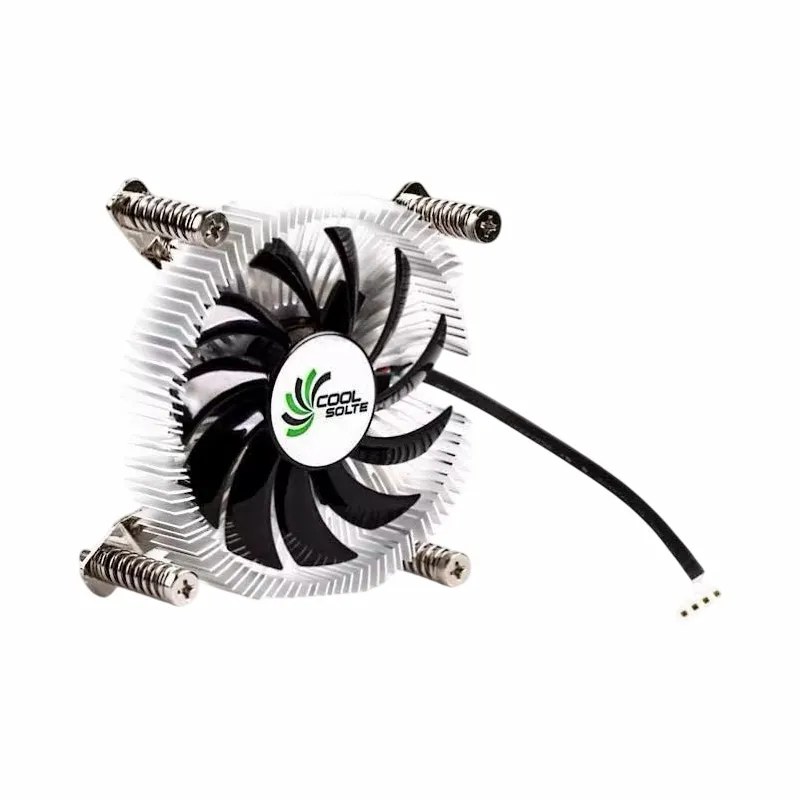
Fans are the workhorses of the airflow system. They push or pull air through the radiator. In a low profile AIO cooler, the fans need to be small but powerful. They have to generate enough airflow to cool the radiator, even with limited space.
There are different types of fans you can choose from. Some are designed for high - static pressure, which is great for pushing air through dense radiators. Others are optimized for high - airflow, which can quickly move a large volume of air. Our Computer Cooler Fan with Alloy Aluminium CPU Heat Sink is a great option that offers a good balance between static pressure and airflow.
Airflow Configurations
Push - Only Configuration
In a push - only configuration, the fans are placed on the front of the radiator, pushing air through it. This is a simple and common setup. It's easy to install and can work well in many cases. However, it might not be the most efficient in all situations, especially if the radiator is very dense.
Pull - Only Configuration
The pull - only configuration has the fans on the back of the radiator, pulling air through it. This can sometimes provide better cooling because the air is less turbulent as it passes through the radiator. But it can also be a bit more challenging to install, especially in a low profile case.
Push - Pull Configuration
The push - pull configuration combines both push and pull fans. You have fans on both the front and the back of the radiator. This setup can provide the best of both worlds. It increases the overall airflow through the radiator and can lead to better cooling performance. However, it also takes up more space and might require more power.
Design Considerations for Low Profile AIO Coolers
Size Constraints
As I mentioned earlier, low profile AIO coolers have to work within tight spaces. This means that every component, from the pump to the fans, has to be carefully designed to fit. The radiator might be smaller, and the fans might have a lower profile. But even with these limitations, we still need to ensure that the airflow is sufficient to cool the CPU.
Noise Levels
No one wants a noisy cooler. In a low profile AIO cooler, the fans need to be designed to operate quietly while still providing enough airflow. This often involves using high - quality bearings and aerodynamic blade designs. Our Air Cooler Fans Cooling Heat Sink for CPU is engineered to run quietly, so you can enjoy a peaceful computing experience.
Compatibility
Low profile AIO coolers need to be compatible with a wide range of CPUs and motherboards. The CPU block should fit properly on different socket types, and the radiator and fans should be able to fit in various cases. We take these compatibility issues seriously and design our coolers to be as versatile as possible.
How to Optimize Airflow in Your System
Case Ventilation
The ventilation of your computer case plays a big role in the overall airflow of your low profile AIO cooler. Make sure your case has enough intake and exhaust vents. You can also add additional case fans to improve the airflow. This will help the AIO cooler work more efficiently by providing a constant supply of fresh air.
Cable Management
Proper cable management is often overlooked but can have a significant impact on airflow. Keep your cables organized and out of the way of the fans and radiator. This will prevent them from blocking the airflow and ensure that the cooler can operate at its best.
Conclusion
So, there you have it - a rundown of the airflow design of a low profile AIO cooler. As a supplier, we understand the importance of getting this design right. We're constantly working on improving our products to provide the best cooling performance in a compact package.
If you're in the market for a low profile AIO cooler or want to learn more about our products, we'd love to hear from you. Whether you're a PC builder, a gamer, or just someone looking to keep their CPU cool, we can help you find the right solution. Reach out to us for a procurement discussion, and let's work together to meet your cooling needs.
References
- Various industry research on CPU cooling technologies
- Manufacturer's specifications of low profile AIO coolers