

What are the differences between different heat sink compounds for OPS CPUs?
As a supplier of OPS CPU heat sinks, I've witnessed firsthand the critical role that heat sink compounds play in maintaining the optimal performance of OPS CPUs. Heat sink compounds, also known as thermal pastes or thermal greases, are substances applied between the CPU and the heat sink to improve thermal conductivity. In this blog post, I'll explore the differences between various heat sink compounds for OPS CPUs, helping you make an informed decision when selecting the right one for your needs.
1. Types of Heat Sink Compounds
Metal - Based Compounds
Metal - based heat sink compounds typically contain metals such as silver, copper, or aluminum. These compounds offer high thermal conductivity, which allows for efficient heat transfer from the CPU to the heat sink. Silver - based compounds, for example, are known for their excellent thermal performance. The high thermal conductivity of silver enables it to quickly conduct heat away from the CPU, keeping the temperature down.
However, metal - based compounds also have some drawbacks. They can be electrically conductive, which means there is a risk of short - circuiting if the compound spills onto other components on the motherboard. Additionally, metal - based compounds can be more expensive than other types of thermal pastes.
Ceramic - Based Compounds
Ceramic - based heat sink compounds are made from ceramic materials such as aluminum oxide or zinc oxide. These compounds are non - electrically conductive, which eliminates the risk of short - circuiting. They are also relatively stable at high temperatures and have good thermal conductivity.
While ceramic - based compounds may not offer the same level of thermal conductivity as metal - based compounds, they are a popular choice for many users due to their safety and reliability. They are often used in applications where electrical safety is a major concern, such as in consumer electronics.
Carbon - Based Compounds
Carbon - based heat sink compounds use carbon materials, such as carbon nanotubes or graphite, to improve thermal conductivity. These compounds offer a good balance between thermal performance and electrical insulation. Carbon nanotubes, in particular, have extremely high thermal conductivity and can provide efficient heat transfer.
Carbon - based compounds are also relatively environmentally friendly compared to some other types of thermal pastes. However, they can be more difficult to apply evenly due to the unique properties of carbon materials.
2. Performance Differences
Thermal Conductivity
The most important performance metric for heat sink compounds is thermal conductivity, which is measured in watts per meter - kelvin (W/m·K). Compounds with higher thermal conductivity can transfer heat more efficiently from the CPU to the heat sink.
Metal - based compounds generally have the highest thermal conductivity, followed by carbon - based and then ceramic - based compounds. For example, a high - quality silver - based compound may have a thermal conductivity of around 8 - 12 W/m·K, while a ceramic - based compound may have a thermal conductivity of 2 - 5 W/m·K.
Viscosity
The viscosity of a heat sink compound affects how easily it can be applied. Compounds with low viscosity are more fluid and can spread more easily, but they may also be more likely to drip or run. High - viscosity compounds are thicker and stay in place better, but they can be more difficult to spread evenly.
When applying a heat sink compound, it's important to choose a viscosity that suits your application method. For example, if you're using a syringe to apply the paste, a lower - viscosity compound may be easier to dispense.
Cure Time
Some heat sink compounds require a cure time after application. During the cure time, the compound undergoes a chemical reaction that improves its thermal performance. Cure times can vary from a few hours to several days, depending on the type of compound.
It's important to follow the manufacturer's instructions regarding cure time. Applying the heat sink and powering on the CPU before the compound has fully cured can result in sub - optimal thermal performance.
3. Compatibility with OPS CPUs
Not all heat sink compounds are compatible with every type of OPS CPU. Some CPUs may generate more heat than others, requiring a compound with higher thermal conductivity. Additionally, the surface finish of the CPU and the heat sink can also affect the performance of the thermal paste.
For high - performance OPS CPUs that generate a large amount of heat, a metal - based or carbon - based compound may be the best choice. These compounds can provide the high thermal conductivity needed to keep the CPU cool under heavy loads.
On the other hand, for lower - power OPS CPUs or applications where electrical safety is a concern, a ceramic - based compound may be more suitable.
4. Our Heat Sink Products and Compounds
As an OPS CPU heat sink supplier, we offer a range of heat sink products that are designed to work well with different types of heat sink compounds. Our Computer Cooler Fan with Alloy Aluminium CPU Heat Sink is a popular choice for many users. The alloy aluminium construction provides good heat dissipation, and when combined with the right heat sink compound, it can effectively cool the OPS CPU.
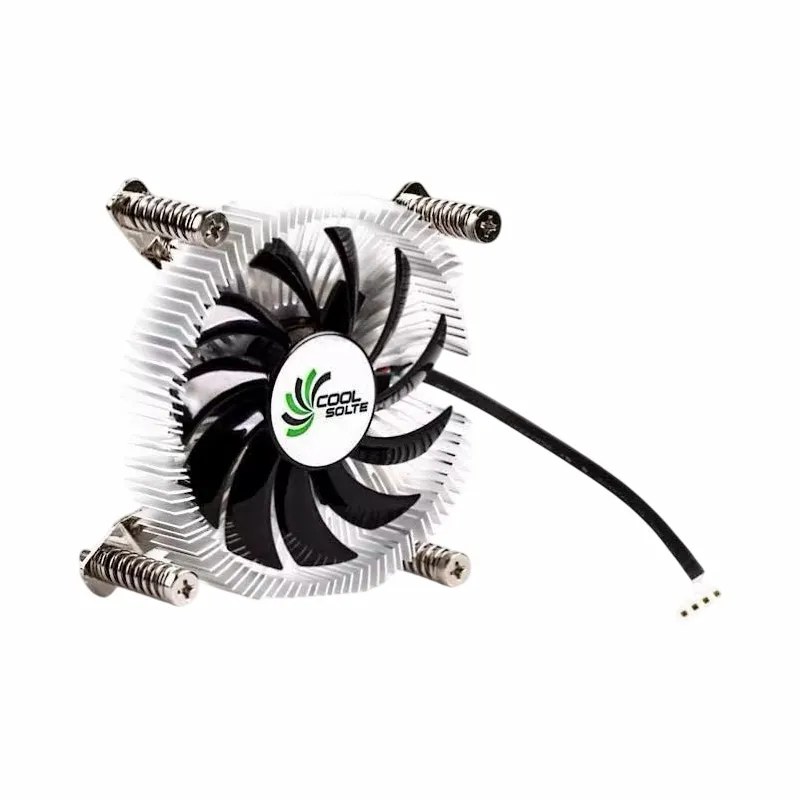

Our Air Cooler Fans Cooling Heat Sink for CPU is another great option. The air cooler fans help to increase the airflow over the heat sink, enhancing the heat transfer process. We recommend using a high - quality heat sink compound with this product to achieve the best cooling performance.
If you're looking for a high - performance heat sink, our Copper CPU Heatpipe Radiator for AMD Intel is a top - of - the - line option. Copper is known for its excellent thermal conductivity, and when paired with a suitable heat sink compound, it can provide outstanding cooling for OPS CPUs.
5. Conclusion and Call to Action
In conclusion, choosing the right heat sink compound for your OPS CPU is crucial for maintaining optimal performance. Different types of heat sink compounds, such as metal - based, ceramic - based, and carbon - based compounds, have their own unique characteristics in terms of thermal conductivity, electrical conductivity, viscosity, and cure time.
When selecting a heat sink compound, consider the specific requirements of your OPS CPU, such as its power consumption and the level of electrical safety needed. Also, make sure to choose a compound that is compatible with your heat sink.
If you're in the market for OPS CPU heat sinks or need advice on choosing the right heat sink compound, we're here to help. Our team of experts can provide you with detailed information and guidance to ensure you make the best choice for your application. Contact us to start a procurement discussion and find the perfect heat sink solution for your OPS CPUs.
References
- "Thermal Interface Materials: A Review", Journal of Thermal Management in Electronics Systems
- "Comparison of Different Types of Thermal Pastes for CPU Cooling", International Journal of Electronics and Electrical Engineering