

The thermal conductivity of a material is a crucial factor in determining the performance of an OPS (Open Pluggable Specification) CPU heat sink. As a leading supplier of OPS CPU heat sinks, I've witnessed firsthand how the choice of heat sink material can significantly impact the efficiency and reliability of a CPU cooling system. In this blog post, I'll delve into the science behind thermal conductivity and explain how it affects the performance of OPS CPU heat sinks.
Understanding Thermal Conductivity
Thermal conductivity, denoted by the symbol "k," is a measure of a material's ability to conduct heat. It is defined as the amount of heat that can be transferred through a unit area of the material per unit time, with a unit temperature gradient across the material. In simpler terms, a material with high thermal conductivity can transfer heat more efficiently than a material with low thermal conductivity.
The SI unit of thermal conductivity is watts per meter-kelvin (W/(m·K)). For example, copper has a high thermal conductivity of about 401 W/(m·K), while aluminum has a thermal conductivity of around 237 W/(m·K). These values indicate that copper can transfer heat more effectively than aluminum.
How Thermal Conductivity Affects OPS CPU Heat Sink Performance
The primary function of an OPS CPU heat sink is to dissipate the heat generated by the CPU into the surrounding environment. The heat transfer process involves three main mechanisms: conduction, convection, and radiation. Among these, conduction plays a vital role in transferring heat from the CPU to the heat sink, and thermal conductivity is the key property that determines the efficiency of this conduction process.
1. Heat Transfer Rate
A heat sink material with high thermal conductivity can transfer heat from the CPU to the fins of the heat sink more quickly. This rapid heat transfer ensures that the CPU temperature remains within a safe operating range, preventing overheating and potential damage to the CPU. For instance, a Copper CPU Heatpipe Radiator for AMD Intel takes advantage of copper's high thermal conductivity to efficiently transfer heat away from the CPU.
2. Temperature Distribution
High thermal conductivity also helps in achieving a more uniform temperature distribution across the heat sink. When the heat is evenly distributed, it can be dissipated more effectively through convection and radiation. In contrast, a heat sink made of a material with low thermal conductivity may have hot spots, which can reduce the overall cooling efficiency.
3. Energy Efficiency
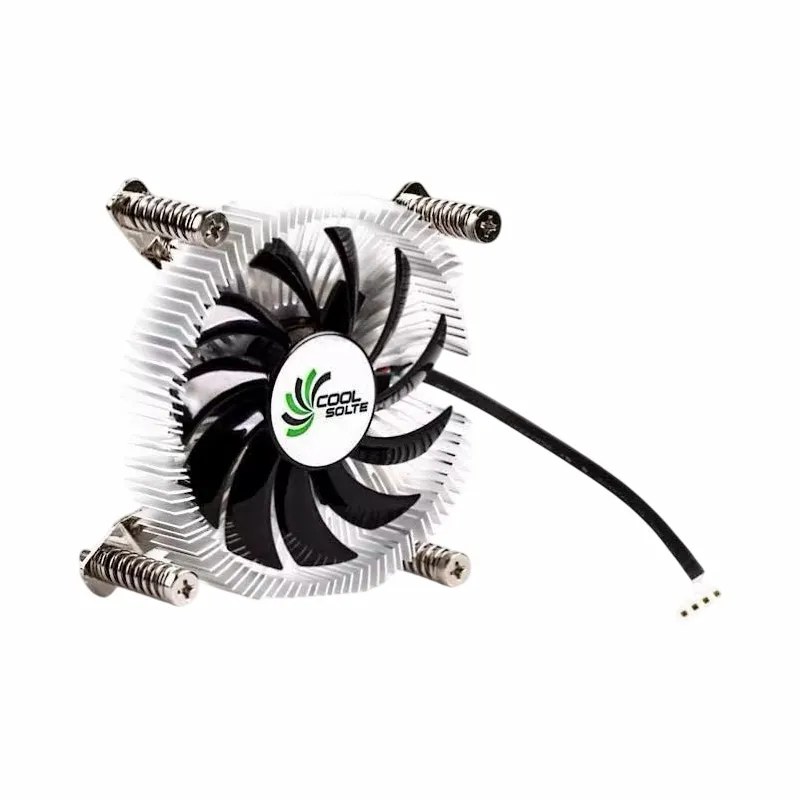
An efficient heat sink can reduce the power consumption of the cooling system. When the heat sink can transfer heat quickly, the cooling fans can operate at lower speeds, consuming less energy. For example, a Computer Cooler Fan with Alloy Aluminium CPU Heat Sink can work more efficiently if the aluminum alloy has a relatively high thermal conductivity, allowing the fan to run at a lower speed while still maintaining adequate cooling.
4. Longevity of the CPU
By effectively dissipating heat, a high-performance heat sink can extend the lifespan of the CPU. Overheating can cause the CPU to degrade over time, leading to reduced performance and potential hardware failures. A heat sink with good thermal conductivity helps to keep the CPU cool, ensuring its long-term reliability.
Common Materials Used in OPS CPU Heat Sinks and Their Thermal Conductivities
Copper
Copper is one of the most popular materials for OPS CPU heat sinks due to its excellent thermal conductivity. As mentioned earlier, copper has a thermal conductivity of about 401 W/(m·K). It is also malleable, which allows for the easy manufacturing of complex heat sink designs. However, copper is relatively heavy and expensive compared to other materials.
Aluminum
Aluminum is another commonly used material in heat sinks. It has a thermal conductivity of around 237 W/(m·K), which is lower than that of copper but still sufficient for many applications. Aluminum is lightweight, corrosion-resistant, and cost-effective, making it a popular choice for mass-produced heat sinks. For example, an Air Cooler Fans Cooling Heat Sink for CPU often uses aluminum fins for efficient heat dissipation.
Aluminum Alloys
Aluminum alloys are also widely used in heat sink manufacturing. By adding other elements to aluminum, the thermal conductivity and mechanical properties of the material can be improved. Some aluminum alloys can have thermal conductivities close to that of pure aluminum, while offering better strength and corrosion resistance.
Factors to Consider When Choosing a Heat Sink Material
CPU Power Dissipation
The power dissipation of the CPU is an important factor to consider when choosing a heat sink material. High-power CPUs generate more heat and require a heat sink with high thermal conductivity to ensure proper cooling. For example, a high-performance gaming CPU may need a copper heat sink to handle the large amount of heat generated.

Cost
Cost is always a consideration in any manufacturing process. While copper offers excellent thermal conductivity, it is more expensive than aluminum. For budget-conscious applications, aluminum or aluminum alloys may be a more suitable choice.
Size and Weight Constraints
In some applications, such as laptops and small form factor PCs, size and weight constraints are critical. Aluminum and aluminum alloys are lightweight, making them ideal for these applications. However, if space is not a major concern and high thermal performance is required, copper may be a better option.
Conclusion
The thermal conductivity of an OPS CPU heat sink material has a profound impact on its performance. A material with high thermal conductivity can transfer heat more efficiently, leading to better temperature management, energy efficiency, and longevity of the CPU. As a supplier of OPS CPU heat sinks, we offer a wide range of products made from different materials to meet the diverse needs of our customers. Whether you need a Copper CPU Heatpipe Radiator for AMD Intel, a Computer Cooler Fan with Alloy Aluminium CPU Heat Sink, or an Air Cooler Fans Cooling Heat Sink for CPU, we have the expertise and products to provide you with the best cooling solutions.
If you're interested in our OPS CPU heat sink products or have any questions about thermal management, please feel free to contact us for procurement and further discussions. We're committed to helping you find the most suitable heat sink for your specific requirements.
References
- Incropera, F. P., DeWitt, D. P., Bergman, T. L., & Lavine, A. S. (2007). Fundamentals of Heat and Mass Transfer. John Wiley & Sons.
- Cengel, Y. A., & Ghajar, A. J. (2015). Heat Transfer: A Practical Approach. McGraw-Hill Education.