

In the world of thermal management, copper heat sinks play a pivotal role in maintaining optimal temperatures for various electronic devices. As a trusted copper heat sink supplier, I've witnessed firsthand the critical importance of understanding how different factors, especially the size of the fins, impact cooling efficiency. In this blog, we'll delve into the science behind it and explore why fin size matters so much.
The Basics of Heat Transfer in Copper Heat Sinks
Before we jump into the impact of fin size, let's briefly review how heat transfer works in copper heat sinks. Heat sinks operate on the principle of conduction, convection, and radiation. Copper, known for its excellent thermal conductivity, efficiently transfers heat from the heat source (such as a CPU) to the heat sink. The fins on the heat sink then increase the surface area, facilitating better heat dissipation through convection. When air flows over the fins, it carries away the heat, cooling down the device.
How Fin Size Affects Surface Area
One of the most significant ways fin size impacts cooling is through its effect on the surface area. Larger fins generally mean more surface area. A greater surface area allows for more contact between the heat sink and the surrounding air, which enhances the rate of heat transfer. For instance, if we compare a heat sink with short, stubby fins to one with long, slender fins of the same base size, the latter will have a larger total surface area. This increased surface area provides more opportunities for the air to absorb and carry away heat, resulting in more efficient cooling.
However, it's not just about making the fins as large as possible. There are practical limitations. If the fins are too long and thin, they may become structurally weak and prone to bending or breaking during handling or installation. Additionally, extremely large fins can create challenges in terms of packaging and fitting the heat sink into the available space within the electronic device.
Impact on Airflow Resistance
Another crucial aspect to consider is the impact of fin size on airflow resistance. When air flows through the fins of a heat sink, it encounters resistance. The size, shape, and spacing of the fins all contribute to this resistance. Smaller, closely spaced fins can create more resistance to airflow compared to larger, more widely spaced fins.
High airflow resistance can be a problem because it reduces the amount of air that can pass through the heat sink. If the air can't flow freely, it won't be able to carry away the heat effectively. This can lead to a buildup of heat around the heat sink and ultimately result in higher operating temperatures for the device. On the other hand, larger fins with appropriate spacing can allow for smoother airflow, improving the overall cooling performance.
The Role of Fin Thickness
Fin thickness is also an important factor related to fin size. Thicker fins can conduct heat more effectively from the base of the heat sink to the outer edges of the fins. This is because they have a larger cross - sectional area for heat conduction. However, thicker fins also take up more space, which can reduce the number of fins that can be placed on the heat sink. This trade - off between heat conduction and the number of fins (and thus surface area) needs to be carefully considered.
In some cases, a heat sink with moderately thick fins and a sufficient number of them can provide the best balance of heat conduction and surface area for optimal cooling. For example, a heat sink with fins that are thick enough to conduct heat well but not so thick that they significantly reduce the overall surface area can perform better than one with either extremely thin or extremely thick fins.
Real - World Applications and Examples
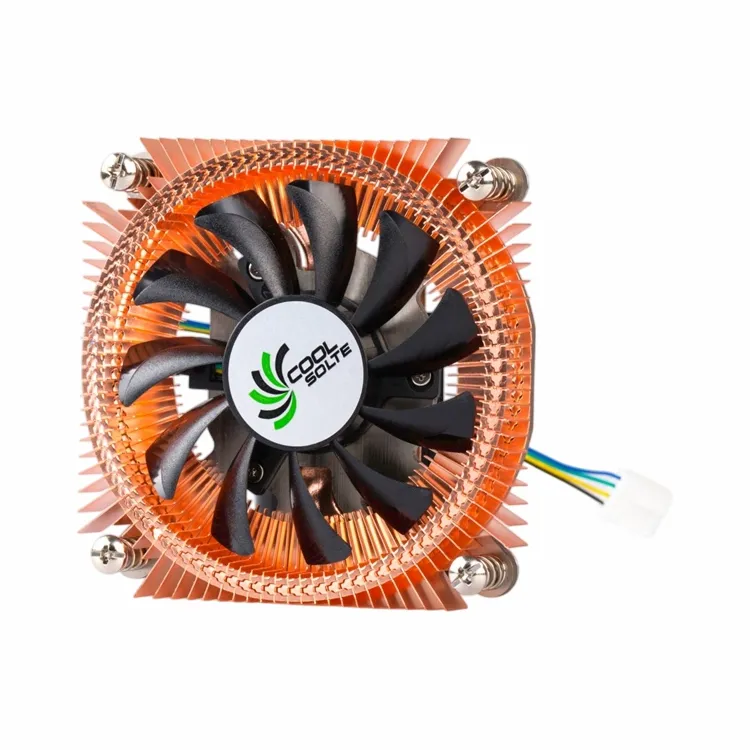
Let's look at some real - world applications to understand the impact of fin size better. In the case of a CPU in a high - performance computer, efficient cooling is essential to prevent overheating and ensure stable operation. A CPU Cooling Fan with Heatsink often comes with carefully designed fins. If the fins are too small, the heat sink may not be able to dissipate the large amount of heat generated by the CPU, leading to thermal throttling and reduced performance.
For a Mini Computer Heat Sink for CPU Devices, size constraints are a major consideration. The heat sink needs to fit within the limited space of a mini - PC while still providing adequate cooling. This may require a balance between fin size and other design factors. Manufacturers may use smaller but more densely packed fins to maximize surface area within the available space, but they also need to ensure that the airflow resistance is not too high.

In the case of a Black Anodized Aluminum Heat Sink for CPU, the fin size can affect both the cooling performance and the aesthetic appeal. The black anodized finish not only looks sleek but can also enhance heat radiation to some extent. However, the size and shape of the fins need to be optimized to work in conjunction with this finish for the best cooling results.
Choosing the Right Fin Size for Your Application
As a copper heat sink supplier, I understand that choosing the right fin size depends on several factors. First, you need to consider the heat load of the device. Devices that generate more heat, such as high - end CPUs or powerful graphics cards, generally require heat sinks with larger fins or a greater number of fins to dissipate the heat effectively.
The available space for the heat sink is another crucial factor. In compact devices, you may need to use smaller fins or a more compact fin design to fit the heat sink. However, you still need to ensure that the surface area and airflow are sufficient for cooling.
The airflow in the system also plays a role. If there is a strong and consistent airflow in the device, you may be able to use smaller fins with higher airflow resistance. On the other hand, if the airflow is weak, you'll need to choose fins that allow for easy air passage.
Conclusion
In conclusion, the size of the fins on a copper heat sink has a profound impact on cooling performance. It affects the surface area, airflow resistance, and heat conduction, all of which are essential for efficient heat dissipation. By carefully considering factors such as heat load, available space, and airflow, you can choose the right fin size for your specific application.
As a copper heat sink supplier, I'm committed to providing high - quality heat sinks with optimized fin designs. Whether you're in the market for a heat sink for a high - performance computer or a compact electronic device, we have the expertise and products to meet your needs. If you're interested in learning more or discussing your specific requirements for copper heat sinks, please don't hesitate to contact us. We're here to help you find the perfect solution for your thermal management challenges.
References
- Incropera, F. P., & DeWitt, D. P. (2002). Fundamentals of Heat and Mass Transfer. John Wiley & Sons.
- Holman, J. P. (2002). Heat Transfer. McGraw - Hill.