

Hey there! I'm a supplier of OPS CPU heat sinks, and I've been in this business for quite a while. One question that often pops up is, "How does the shape of an OPS CPU heat sink affect its cooling efficiency?" Well, let's dive right into it.
First off, what exactly is an OPS CPU heat sink? It's a crucial component in your computer system. The CPU generates a ton of heat when it's working hard, and if that heat isn't dissipated properly, it can lead to all sorts of problems, like reduced performance or even hardware damage. That's where the heat sink comes in. Its job is to absorb the heat from the CPU and transfer it to the surrounding air.
Now, let's talk about shape. The shape of a heat sink can have a huge impact on how well it cools. There are several common shapes out there, and each has its own pros and cons.
Fin - Shaped Heat Sinks
One of the most popular shapes is the fin - shaped heat sink. These heat sinks have a bunch of thin, vertical fins that stick out. The reason for this design is simple: it increases the surface area of the heat sink. You see, the more surface area the heat sink has, the more heat it can transfer to the air. When the hot air comes into contact with the fins, it picks up the heat and carries it away.
The fin - shaped heat sinks are great because they're relatively easy to manufacture. They're also very effective at cooling in a wide range of applications. However, they do have some drawbacks. If the fins are too close together, it can restrict the airflow. This means that the hot air might not be able to move away from the heat sink as quickly as it should, which can reduce the cooling efficiency.
We offer a great Air Cooler Fans Cooling Heat Sink for CPU that features a well - designed fin structure. The fins are spaced just right to allow for optimal airflow while still providing a large surface area for heat transfer.
Pin - Fin Heat Sinks
Pin - fin heat sinks are another option. Instead of vertical fins, they have a series of small pins sticking out. These pins are arranged in a grid pattern. Similar to fin - shaped heat sinks, the main advantage of pin - fin heat sinks is the increased surface area.
One of the benefits of pin - fin heat sinks is that they can be more effective in turbulent airflow conditions. The pins break up the airflow, creating small eddies that help to mix the hot and cold air more efficiently. However, they can be a bit more difficult to manufacture compared to fin - shaped heat sinks. Also, if the pins are too long or too thin, they can be easily damaged.
Heat Pipe - Based Heat Sinks
Heat pipe - based heat sinks are a bit different. They use heat pipes, which are sealed tubes filled with a working fluid. The heat from the CPU vaporizes the fluid inside the heat pipe. The vapor then moves to the cooler end of the heat pipe, where it condenses back into a liquid and releases the heat.
These heat sinks often have a combination of fins and heat pipes. The heat pipes are very efficient at transferring heat from the CPU to the fins. The shape of the heat pipe and how it's integrated with the fins can greatly affect the cooling efficiency. For example, if the heat pipes are bent at sharp angles, it can impede the flow of the vapor and liquid inside, reducing the heat transfer rate.
Our Copper CPU Heatpipe Radiator for AMD Intel is a top - notch example of a heat pipe - based heat sink. It's designed to maximize the heat transfer capabilities of the heat pipes while using a well - thought - out fin structure for efficient air cooling.
Flat - Plate Heat Sinks
Flat - plate heat sinks are relatively simple in design. They're just a flat plate, usually made of a good heat - conducting material like aluminum or copper. These heat sinks are often used in applications where space is limited or where a very low - profile design is required.
The main drawback of flat - plate heat sinks is that they have a relatively small surface area compared to fin - or pin - fin heat sinks. This means that they're not as efficient at cooling as the other types. However, they can still work well in low - power applications where the CPU doesn't generate a huge amount of heat.
The Role of Airflow
No matter what shape the heat sink is, airflow is crucial for its cooling efficiency. A good heat sink design takes into account how the air will flow around it. For example, some heat sinks are designed to be used with a fan. The fan helps to force the air through the heat sink, increasing the rate of heat transfer.
In some cases, the shape of the heat sink can be optimized for a specific type of airflow. For example, a heat sink might be designed to work best with a side - mounted fan or a top - mounted fan.
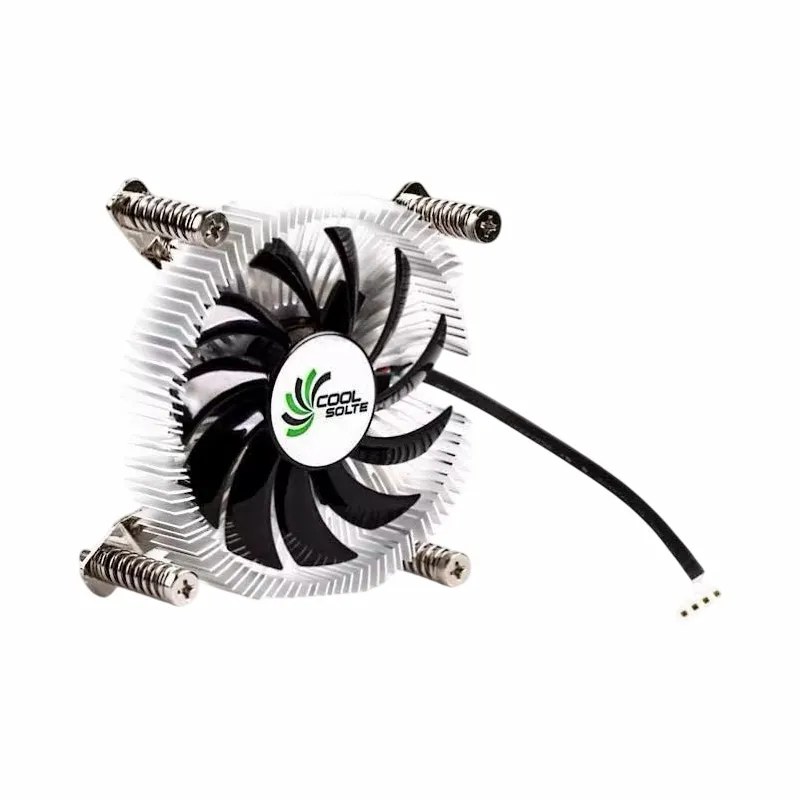
Our Computer Cooler Fan with Alloy Aluminium CPU Heat Sink is a great example of a heat sink - fan combination. The heat sink is designed to work in harmony with the fan to ensure maximum cooling efficiency. The alloy aluminum construction also helps to transfer heat quickly and effectively.

Conclusion
So, as you can see, the shape of an OPS CPU heat sink plays a vital role in its cooling efficiency. Different shapes have different advantages and disadvantages, and the right choice depends on the specific application. Whether you need a high - performance heat sink for a powerful CPU or a low - profile one for a space - constrained device, there's a shape out there that's perfect for you.
If you're in the market for OPS CPU heat sinks, we're here to help. We offer a wide range of heat sinks in different shapes and sizes to meet your needs. Whether you're a computer manufacturer, a system integrator, or just someone looking to upgrade their computer's cooling system, we've got the products for you. Contact us to start a procurement discussion, and let's find the perfect heat sink solution for your project.
References
- Incropera, F. P., DeWitt, D. P., Bergman, T. L., & Lavine, A. S. (2007). Fundamentals of Heat and Mass Transfer. Wiley.
- Kays, W. M., Crawford, M. E., & Weigand, B. (2005). Convective Heat and Mass Transfer. McGraw - Hill.