

In the dynamic realm of computer hardware, efficient cooling is paramount for maintaining the optimal performance and longevity of CPUs. Among the various cooling solutions available, aluminum CPU coolers stand out for their excellent thermal conductivity, lightweight nature, and cost - effectiveness. One critical factor that significantly influences the performance of an aluminum CPU cooler is the number of fins it has. As a seasoned aluminum CPU cooler supplier, I have witnessed firsthand how this seemingly simple design element can make a substantial difference in cooling efficiency.
The Role of Fins in Heat Dissipation
Before delving into the impact of fin quantity, it's essential to understand the fundamental role fins play in the heat dissipation process. Fins are extended surfaces attached to the base of the CPU cooler. Their primary function is to increase the surface area available for heat transfer. When a CPU generates heat, it is transferred to the base of the cooler, which is in direct contact with the CPU. From the base, the heat spreads to the fins. The larger the surface area of the fins, the more heat can be transferred from the solid material of the cooler to the surrounding air.
The process of heat transfer from the fins to the air occurs through convection. As the air passes over the fins, it absorbs the heat, carrying it away from the cooler. This continuous cycle of heat transfer helps maintain the CPU at a safe operating temperature.
Impact of Fin Number on Surface Area
The most direct impact of increasing the number of fins on an aluminum CPU cooler is the increase in surface area. A greater number of fins means more surface area available for heat transfer. For example, if we compare two coolers of the same size, one with 50 fins and the other with 100 fins, the cooler with 100 fins will have a significantly larger surface area. This increased surface area allows for more efficient heat transfer from the fins to the air, as there are more contact points between the solid fins and the surrounding air molecules.
However, it's important to note that simply adding more fins does not always result in a linear increase in surface area. As the fins become more numerous, they may need to be thinner to fit within the same physical space. Thinner fins have less surface area per fin, which can offset some of the gains from adding more fins. Additionally, if the fins are too close together, they can create a phenomenon known as fin crowding, which can impede the flow of air through the cooler.
Effect on Airflow
Airflow is another crucial factor in the performance of an aluminum CPU cooler. The number of fins can have a significant impact on how easily air can pass through the cooler. When the fins are spaced too closely together due to a large number of fins, the airflow resistance increases. This means that the fan has to work harder to push air through the cooler, which can lead to increased noise levels and reduced overall cooling efficiency.
On the other hand, if the number of fins is too low, the surface area available for heat transfer is limited. While the airflow may be unrestricted, there may not be enough surface area to transfer the heat effectively from the cooler to the air. Therefore, finding the right balance between the number of fins and airflow is essential for optimal cooling performance.
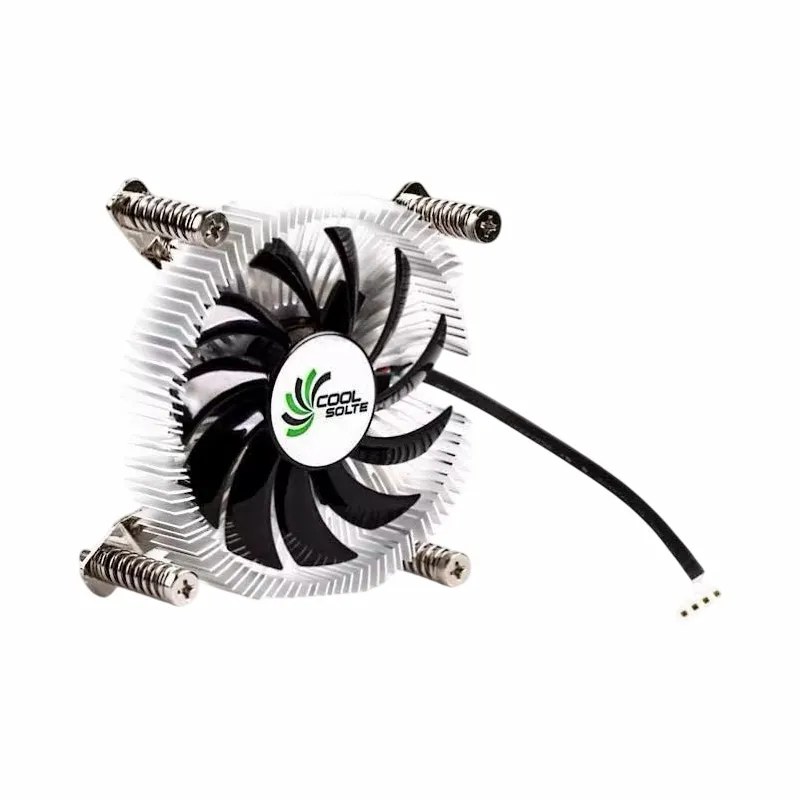

For instance, a cooler with a moderate number of well - spaced fins can provide a good compromise. It offers a sufficient surface area for heat transfer while allowing for smooth airflow. This type of design can result in efficient cooling with relatively low noise levels.
Impact on Cooling Efficiency
The overall cooling efficiency of an aluminum CPU cooler is a combination of the surface area available for heat transfer and the ease of airflow. A cooler with an appropriate number of fins can achieve a high level of cooling efficiency. When the number of fins is optimized, the heat transfer from the CPU to the air is maximized, and the CPU can operate at a lower temperature.
Lower operating temperatures are beneficial for several reasons. First, they can improve the performance of the CPU. High temperatures can cause the CPU to throttle, reducing its clock speed to prevent overheating. By keeping the CPU cool, it can maintain its full performance potential. Second, lower temperatures can extend the lifespan of the CPU. Overheating can cause damage to the internal components of the CPU over time, leading to premature failure.
As an aluminum CPU cooler supplier, we understand the importance of fin design in achieving optimal cooling efficiency. We offer a range of products with different fin configurations to meet the diverse needs of our customers. For example, our Computer Cooler Fan with Alloy Aluminium CPU Heat Sink is designed with a carefully engineered fin structure to provide excellent heat dissipation while ensuring smooth airflow.
Considerations for Different CPU Applications
The ideal number of fins on an aluminum CPU cooler can vary depending on the specific application of the CPU. For high - performance CPUs that generate a large amount of heat, such as those used in gaming PCs or workstations, a cooler with a relatively large number of fins may be required. These CPUs need a high surface area for heat transfer to keep up with the high heat output. However, the design must also take into account airflow to prevent excessive resistance.
In contrast, for low - power CPUs used in laptops or small form - factor PCs, a cooler with a smaller number of fins may be sufficient. These CPUs generate less heat, so a smaller surface area for heat transfer may be adequate. Additionally, space constraints in these devices often require a more compact cooler design, which may limit the number of fins.
Our Air Cooler Fans Cooling Heat Sink for CPU is suitable for a wide range of CPU applications. It is designed to offer a balance between fin number, surface area, and airflow, making it a versatile choice for different types of computers.
Cost and Manufacturing Considerations
The number of fins on an aluminum CPU cooler can also impact the cost and manufacturing process. More fins generally mean more complex manufacturing. Each fin needs to be precisely fabricated and attached to the base of the cooler. This can increase the production time and cost.
In addition, the material cost may also increase with a larger number of fins, as more aluminum is required. However, as a supplier, we strive to optimize the fin design to balance cost and performance. We use advanced manufacturing techniques to produce high - quality coolers with an appropriate number of fins at a competitive price.
Conclusion
In conclusion, the number of fins on an aluminum CPU cooler has a significant impact on its performance. It affects the surface area available for heat transfer, the airflow through the cooler, and ultimately the overall cooling efficiency. As an aluminum CPU cooler supplier, we recognize the importance of fin design in creating effective cooling solutions.
We offer a variety of products, including the Copper CPU Heatpipe Radiator for AMD Intel, which are designed with careful consideration of fin number and other factors. Whether you are a PC enthusiast looking for high - performance cooling or a system integrator in need of reliable cooling solutions, we have the products to meet your requirements.
If you are interested in learning more about our aluminum CPU coolers or would like to discuss your specific cooling needs, please feel free to contact us for procurement and further discussions.
References
- Incropera, F. P., & DeWitt, D. P. (2002). Fundamentals of Heat and Mass Transfer. Wiley.
- Kraus, A. D., Aziz, A., & Welty, J. R. (2001). Extended Surface Heat Transfer. Wiley - Interscience.