

As a supplier of Aluminum CPU Coolers, I've delved deep into the factors that affect the performance of these crucial components. One aspect that often goes unnoticed but plays a significant role is the material purity of aluminum used in CPU coolers. In this blog, we'll explore how the material purity of aluminum impacts the performance of a CPU cooler.
Understanding Aluminum Purity in CPU Coolers
Aluminum is a popular choice for CPU coolers due to its excellent thermal conductivity, lightweight nature, and relatively low cost. However, not all aluminum is created equal. The purity of aluminum refers to the percentage of aluminum in the material, with higher purity levels indicating fewer impurities. Common purity levels for aluminum used in CPU coolers range from 99% to 99.99%.
The impurities in aluminum can include elements such as iron, silicon, copper, and zinc. These impurities can have a significant impact on the thermal conductivity and mechanical properties of the aluminum. For example, iron and silicon can form hard particles in the aluminum, which can reduce its thermal conductivity and make it more brittle.
Impact on Thermal Conductivity
Thermal conductivity is one of the most important factors in determining the performance of a CPU cooler. It refers to the ability of a material to conduct heat from one point to another. The higher the thermal conductivity, the more efficiently the cooler can transfer heat away from the CPU.
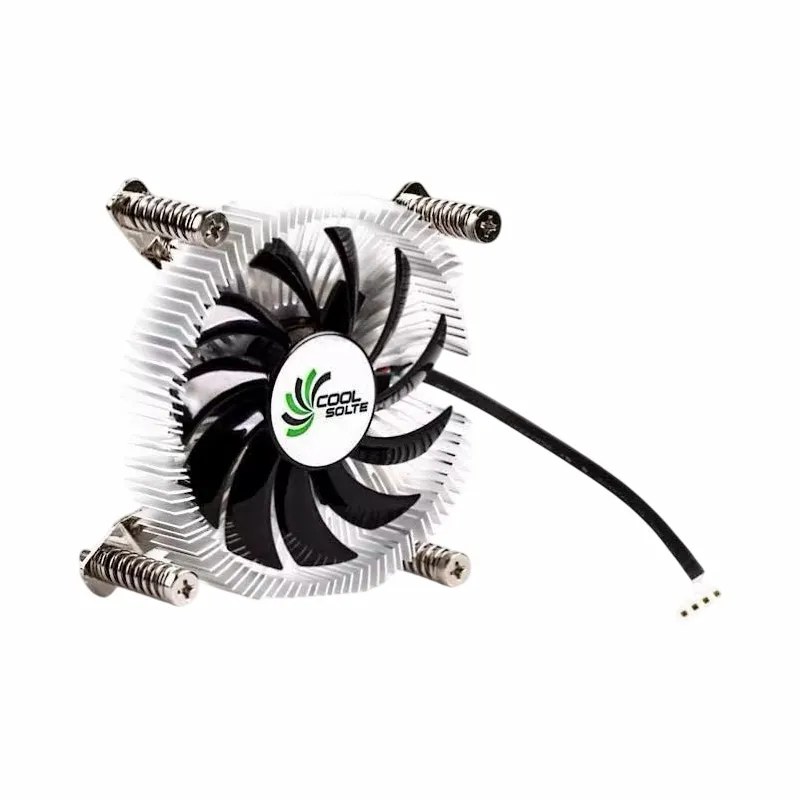
Pure aluminum has a relatively high thermal conductivity, making it an ideal material for CPU coolers. However, as the purity of aluminum decreases, the thermal conductivity also decreases. This is because the impurities in the aluminum act as barriers to the flow of heat, reducing the efficiency of heat transfer.
For example, aluminum with a purity of 99.9% has a thermal conductivity of approximately 237 W/mK, while aluminum with a purity of 99% has a thermal conductivity of around 205 W/mK. This difference in thermal conductivity can have a significant impact on the performance of a CPU cooler, especially in high-performance systems where heat dissipation is critical.
Impact on Heat Dissipation
In addition to thermal conductivity, the material purity of aluminum can also affect the heat dissipation capabilities of a CPU cooler. Heat dissipation refers to the process of transferring heat from the cooler to the surrounding environment. This is typically achieved through a combination of conduction, convection, and radiation.
Pure aluminum has a smooth surface finish, which allows for better contact with the CPU and more efficient heat transfer. Impurities in the aluminum can cause the surface to become rough, reducing the contact area between the cooler and the CPU and increasing the thermal resistance. This can result in less efficient heat transfer and higher CPU temperatures.
Furthermore, the presence of impurities can also affect the convection process. Convection is the transfer of heat through the movement of a fluid, such as air. Impurities in the aluminum can disrupt the flow of air around the cooler, reducing the efficiency of convection and heat dissipation.

Impact on Mechanical Properties
The material purity of aluminum can also have an impact on the mechanical properties of a CPU cooler. Mechanical properties refer to the physical characteristics of a material, such as its strength, hardness, and ductility.
Pure aluminum is relatively soft and ductile, which makes it easy to form into complex shapes. However, as the purity of aluminum decreases, the material becomes harder and more brittle. This can make it more difficult to manufacture CPU coolers with intricate designs and can also increase the risk of cracking or breaking during the manufacturing process or in use.
In addition, impurities in the aluminum can also affect the corrosion resistance of the cooler. Corrosion can cause the cooler to deteriorate over time, reducing its performance and lifespan. Pure aluminum has a natural oxide layer that provides some protection against corrosion, but impurities can disrupt this layer and make the cooler more susceptible to corrosion.
Choosing the Right Aluminum Purity for Your CPU Cooler
When choosing an aluminum CPU cooler, it's important to consider the material purity of the aluminum. Higher purity aluminum generally offers better thermal conductivity, heat dissipation, and mechanical properties. However, it also comes at a higher cost.
For most consumer applications, aluminum with a purity of 99% to 99.5% is sufficient. This type of aluminum offers a good balance between performance and cost. However, for high-performance systems or applications where heat dissipation is critical, such as overclocking or gaming, it may be worth investing in a cooler made from higher purity aluminum, such as 99.9% or 99.99%.
Our Product Range
As a leading supplier of Aluminum CPU Coolers, we offer a wide range of products to meet the needs of different customers. Our Copper CPU Heatpipe Radiator for AMD Intel combines the excellent thermal conductivity of copper heatpipes with the lightweight and cost-effective nature of aluminum fins. This radiator is designed to provide efficient heat dissipation for both AMD and Intel CPUs.
Our Air Cooler Fans Cooling Heat Sink for CPU features a high-performance fan and a large aluminum heat sink. The fan helps to increase the airflow around the heat sink, improving the efficiency of heat dissipation. This cooler is suitable for a wide range of CPUs and is easy to install.
We also offer the Computer Cooler Fan with Alloy Aluminium CPU Heat Sink. This product combines a powerful fan with an alloy aluminum heat sink for enhanced cooling performance. The alloy aluminum heat sink provides better mechanical properties and corrosion resistance compared to pure aluminum.
Conclusion
In conclusion, the material purity of aluminum in a CPU cooler has a significant impact on its performance. Higher purity aluminum offers better thermal conductivity, heat dissipation, and mechanical properties, but it also comes at a higher cost. When choosing an aluminum CPU cooler, it's important to consider your specific needs and budget.
If you're interested in learning more about our Aluminum CPU Coolers or would like to discuss your specific requirements, please feel free to contact us for a purchase negotiation. We're committed to providing high-quality products and excellent customer service.
References
- Incropera, F. P., & DeWitt, D. P. (2002). Fundamentals of Heat and Mass Transfer. John Wiley & Sons.
- Holman, J. P. (2002). Heat Transfer. McGraw-Hill.
- ASM Handbook Committee. (1993). ASM Handbook Volume 2: Properties and Selection: Nonferrous Alloys and Special-Purpose Materials. ASM International.