

As a supplier of OPS CPU heat sinks, I've often been asked about the significance of the color of these crucial components. Many customers focus on factors like material, size, and cooling efficiency, but the color of a heat sink can also play a role in its performance and overall functionality. In this blog, I'll delve into the science behind how the color of an OPS CPU heat sink matters.
The Basics of Heat Transfer
Before we discuss the impact of color, it's essential to understand the basic principles of heat transfer. Heat can be transferred through three main mechanisms: conduction, convection, and radiation. In the context of a CPU heat sink, conduction occurs when heat is transferred from the CPU to the heat sink through direct contact. Convection takes place as the heat is carried away by a fluid, usually air, that flows over the heat sink. Radiation is the emission of electromagnetic waves, which can also transfer heat.
Color and Radiation
The color of a heat sink can significantly affect its ability to radiate heat. Dark colors, such as black, absorb and emit more radiation than light colors. This is because dark colors have a higher emissivity, which is a measure of how well a material can emit thermal radiation. Emissivity ranges from 0 to 1, with 1 being a perfect emitter. A black surface typically has an emissivity close to 1, while a white surface has an emissivity closer to 0.
When a heat sink is operating, it absorbs heat from the CPU and then radiates that heat into the surrounding environment. A heat sink with a high emissivity will be more efficient at radiating heat, which can help to keep the CPU cooler. For example, a black heat sink will radiate heat more effectively than a silver or white heat sink of the same material and design.

Color and Convection
While radiation is an important factor, convection also plays a significant role in the cooling process. The color of a heat sink can indirectly affect convection by influencing the temperature of the air around it. Dark-colored heat sinks absorb more sunlight and ambient heat, which can cause the air around them to heat up. This can lead to a decrease in the temperature difference between the heat sink and the surrounding air, which can reduce the efficiency of convection.
On the other hand, light-colored heat sinks reflect more sunlight and ambient heat, which can help to keep the air around them cooler. This can increase the temperature difference between the heat sink and the surrounding air, which can enhance the efficiency of convection. However, it's important to note that the effect of color on convection is generally less significant than its effect on radiation.
Practical Considerations
In real-world applications, the choice of heat sink color often depends on a variety of factors, including the operating environment, the specific requirements of the CPU, and personal preference. For example, in a computer case that is not exposed to direct sunlight, the effect of color on convection may be negligible. In this case, a black heat sink may be the best choice, as it will be more efficient at radiating heat.
However, in an environment where the heat sink is exposed to direct sunlight or high ambient temperatures, a light-colored heat sink may be more suitable. This can help to reduce the amount of heat absorbed from the surroundings, which can improve the overall cooling performance.
Our Product Offerings
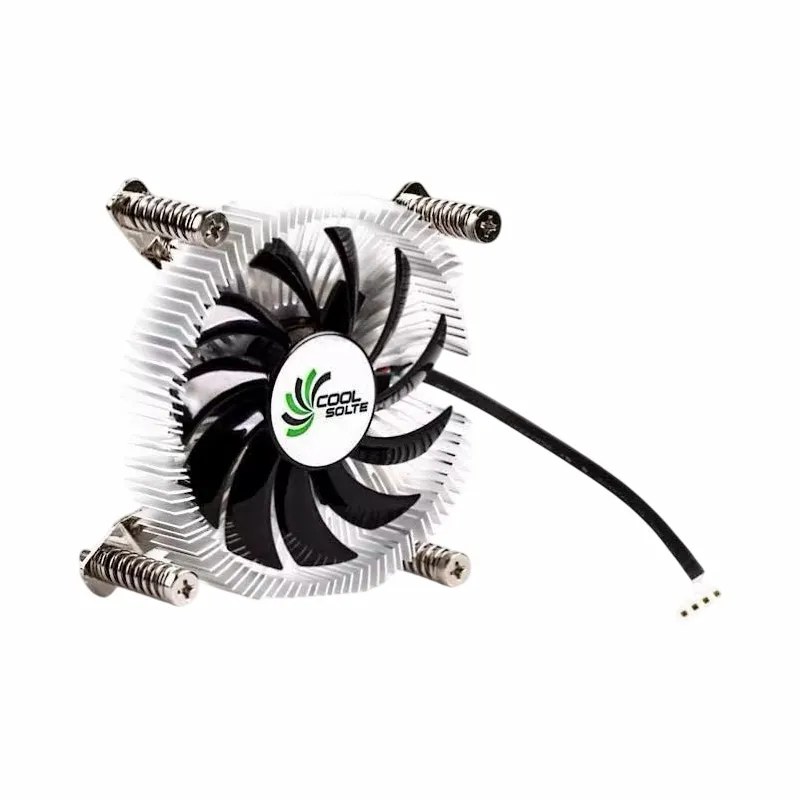
At our company, we offer a wide range of OPS CPU heat sinks in different colors and materials to meet the diverse needs of our customers. Our Computer Cooler Fan with Alloy Aluminium CPU Heat Sink is available in both black and silver finishes. The black finish provides excellent radiation efficiency, while the silver finish offers a more aesthetically pleasing appearance.
We also have the Air Cooler Fans Cooling Heat Sink for CPU, which is designed to provide efficient cooling through a combination of convection and radiation. This heat sink is available in a variety of colors, allowing you to choose the one that best suits your needs.
In addition, our Copper CPU Heatpipe Radiator for AMD Intel is a high-performance option that is available in a black finish. The copper material provides excellent thermal conductivity, while the black finish enhances the heat sink's ability to radiate heat.
Conclusion
In conclusion, the color of an OPS CPU heat sink can have a significant impact on its performance. Dark colors are generally more efficient at radiating heat, while light colors can help to reduce the amount of heat absorbed from the surroundings. When choosing a heat sink, it's important to consider the operating environment, the specific requirements of the CPU, and personal preference.
If you're in the market for an OPS CPU heat sink, we invite you to explore our product offerings. Our team of experts is available to help you choose the right heat sink for your needs. Contact us today to start a discussion about your procurement requirements and let's work together to find the perfect solution for your cooling needs.
References
- Incropera, F. P., & DeWitt, D. P. (2002). Fundamentals of Heat and Mass Transfer. John Wiley & Sons.
- Holman, J. P. (2002). Heat Transfer. McGraw-Hill.