

Hey there! As a supplier of OPS CPU heat sinks, I get asked a lot of questions about these little wonders that keep our CPUs from overheating. One question that pops up quite often is, "Can humidity cause corrosion in an OPS CPU heat sink?" Well, let's dive right into it.
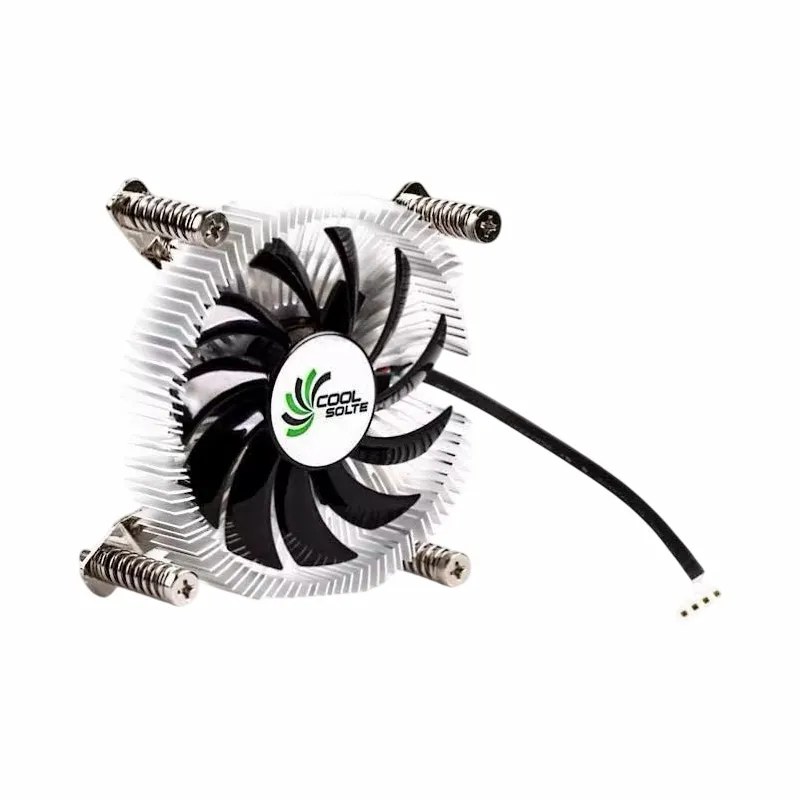

First off, let's talk about what an OPS CPU heat sink is. For those who aren't tech - savvy, an OPS (Open Pluggable Specification) CPU heat sink is a crucial component in a computer system. Its main job is to dissipate the heat generated by the CPU. It does this by providing a large surface area for the heat to transfer from the CPU to the surrounding air. We offer a wide range of heat sinks, like the Air Cooler Fans Cooling Heat Sink for CPU, the Copper CPU Heatpipe Radiator for AMD Intel, and the Computer Cooler Fan with Alloy Aluminium CPU Heat Sink.
Now, back to the question at hand: humidity and corrosion. Humidity is basically the amount of water vapor in the air. When the air is humid, there's more water floating around. And water, as we all know, can be a real troublemaker when it comes to metal components.
Most OPS CPU heat sinks are made from metals like aluminum or copper. These metals are great at conducting heat, but they're also susceptible to corrosion under certain conditions. When water vapor in the air comes into contact with the metal surface of a heat sink, it can form a thin layer of moisture. This moisture can start a chemical reaction with the metal, leading to corrosion.
Let's break down the process a bit more. Corrosion is essentially an oxidation reaction. In the presence of water and oxygen, metals like aluminum and copper start to break down. For aluminum, it forms aluminum oxide. While aluminum oxide can actually act as a protective layer to some extent, in high - humidity environments, the corrosion can progress and cause pitting on the surface of the heat sink.
Copper, on the other hand, forms copper oxide and eventually, if the conditions are right, copper carbonate. You've probably seen the greenish - blue patina on old copper statues or pipes. That's copper carbonate. In a CPU heat sink, this kind of corrosion can affect the heat - transfer efficiency of the heat sink.
The rate of corrosion depends on a few factors. The first is the relative humidity. The higher the relative humidity, the more water vapor there is in the air, and the more likely corrosion is to occur. Generally, when the relative humidity exceeds 60%, the risk of corrosion starts to increase significantly.
Another factor is the presence of contaminants in the air. Things like dust, dirt, and industrial pollutants can mix with the moisture on the heat - sink surface and accelerate the corrosion process. For example, if there are sulfur compounds in the air, they can react with the metal and form sulfides, which are even more corrosive than simple oxides.
Temperature also plays a role. Higher temperatures can speed up the chemical reactions involved in corrosion. So, if your CPU heat sink is operating in a hot and humid environment, it's in double trouble.
Now, you might be wondering, "How can I tell if my OPS CPU heat sink is corroded?" Well, there are a few signs. Visually, you might notice discoloration on the surface of the heat sink. For aluminum, it might turn a dull gray or white, while copper might show green or blue spots. You might also notice a rough or pitted surface.
In terms of performance, a corroded heat sink won't be as efficient at transferring heat. This can lead to higher CPU temperatures, which in turn can cause the CPU to throttle its performance to prevent overheating. You might notice your computer running slower, or it might even shut down unexpectedly due to overheating.
So, what can you do to prevent humidity - induced corrosion in your OPS CPU heat sink? The first thing is to control the environment. If possible, keep your computer in a room with a stable temperature and humidity level. You can use a dehumidifier to reduce the humidity in the air.
Regular cleaning is also important. Use compressed air to blow out any dust or dirt that might be accumulating on the heat sink. This not only helps prevent corrosion but also improves the heat - transfer efficiency of the heat sink.
When it comes to choosing a heat sink, consider the materials and coatings. Some heat sinks are treated with anti - corrosion coatings that can provide an extra layer of protection. Our Air Cooler Fans Cooling Heat Sink for CPU is designed with durability in mind, and we use high - quality materials that are more resistant to corrosion.
As a supplier, we understand the importance of providing reliable OPS CPU heat sinks. We've done a lot of research and testing to make sure our products can withstand different environmental conditions. Whether you're using your computer in a normal office environment or in a more challenging industrial setting, we've got you covered.
If you're in the market for a new OPS CPU heat sink, or if you have any questions about preventing corrosion, don't hesitate to reach out. We're here to help you make the right choice for your needs. Our team of experts can provide you with more information and guidance on choosing the best heat sink for your specific situation.
In conclusion, humidity can definitely cause corrosion in an OPS CPU heat sink. But with the right precautions and the right heat - sink selection, you can minimize the risk and ensure that your CPU stays cool and running smoothly. So, if you're looking for a high - quality, corrosion - resistant OPS CPU heat sink, give us a shout. Let's start a conversation about how we can meet your cooling needs.
References
- "Corrosion of Metals in Atmospheric Environments" - A scientific paper on the effects of humidity and other environmental factors on metal corrosion.
- "Thermal Management in Computer Systems" - A book that covers the importance of heat sinks and how environmental conditions can affect their performance.