

In the world of server - grade CPUs, efficient cooling is of utmost importance. These high - performance processors generate a significant amount of heat during operation, and improper cooling can lead to reduced performance, system instability, and even hardware damage. As a supplier of low - profile All - in - One (AIO) coolers, I often receive inquiries about whether our low - profile AIO coolers can be used with server - grade CPUs. In this blog, I'll delve into this topic and provide a comprehensive analysis.
Understanding Server - Grade CPUs and Their Cooling Requirements
Server - grade CPUs are designed for continuous, high - load operation. They typically have a large number of cores, high clock speeds, and are used in data centers, enterprise servers, and other critical applications. These CPUs can have high Thermal Design Power (TDP) ratings, sometimes exceeding 200 watts or more. The high TDP means that they produce a substantial amount of heat that needs to be dissipated effectively to maintain optimal performance.
The cooling solution for a server - grade CPU must be able to handle this high heat output while also ensuring reliability and stability over long periods. Traditional air coolers and liquid cooling systems are commonly used in server environments. However, in some cases, space constraints may limit the use of large - scale cooling solutions. This is where low - profile AIO coolers come into play.
The Advantages of Low - Profile AIO Coolers
Low - profile AIO coolers offer several advantages that make them an attractive option for certain server setups.
Space - Saving Design: As the name suggests, low - profile AIO coolers have a compact design. They are ideal for servers with limited space, such as rack - mounted servers or small form - factor server enclosures. This allows for more efficient use of space within the server cabinet, enabling the installation of more servers in a given area.
Ease of Installation: Compared to custom liquid cooling systems, low - profile AIO coolers are relatively easy to install. They come pre - filled with coolant and are designed to be a plug - and - play solution. This reduces the installation time and complexity, making them a convenient choice for IT administrators.
Quiet Operation: AIO coolers generally operate more quietly than high - performance air coolers. This is beneficial in server rooms where noise levels need to be kept to a minimum. The reduced noise can also contribute to a more comfortable working environment for data center staff.
Challenges of Using Low - Profile AIO Coolers with Server - Grade CPUs
Despite their advantages, there are some challenges associated with using low - profile AIO coolers with server - grade CPUs.

Heat Dissipation Capacity: Server - grade CPUs generate a large amount of heat, and low - profile AIO coolers may have limited heat dissipation capacity compared to larger, more powerful cooling solutions. The smaller radiator and fan size of low - profile AIO coolers may not be sufficient to handle the high TDP of some server - grade CPUs, especially under heavy load.
Long - Term Reliability: Server environments require high - reliability components. Low - profile AIO coolers are often designed for consumer - grade or small - scale applications. Their long - term reliability in a continuous, high - load server environment may be a concern. The coolant in AIO coolers can degrade over time, and the pump may experience wear and tear, potentially leading to cooling system failures.
Factors to Consider
When considering using a low - profile AIO cooler with a server - grade CPU, several factors should be taken into account.
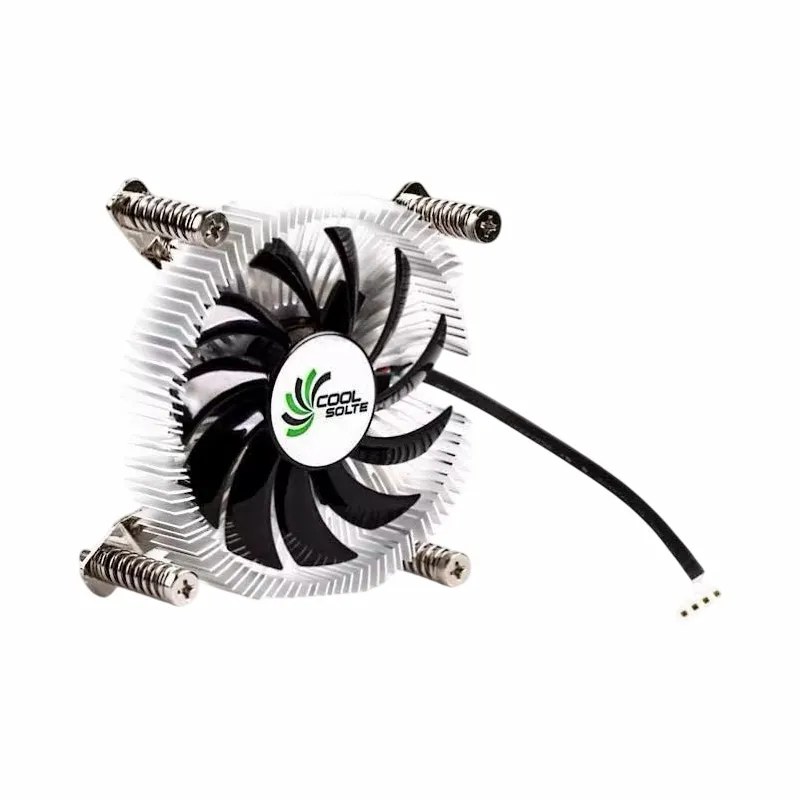
TDP of the CPU: The Thermal Design Power of the server - grade CPU is a crucial factor. Before choosing a low - profile AIO cooler, it's essential to ensure that the cooler's heat dissipation capacity is sufficient to handle the CPU's TDP. You can refer to the CPU's specifications and the cooler's technical documentation to make this assessment.

Server Environment: The operating environment of the server also plays a role. If the server room has good ventilation and relatively low ambient temperatures, a low - profile AIO cooler may be more likely to perform adequately. However, in a hot or poorly ventilated environment, the cooling requirements will be more demanding.
Workload Profile: The type of workload the server will be running is important. If the server is used for light - load tasks or has periods of low activity, a low - profile AIO cooler may be sufficient. But for servers running intensive, continuous workloads, such as database servers or virtualization hosts, a more powerful cooling solution may be necessary.
Our Low - Profile AIO Cooler Offerings
As a supplier of low - profile AIO coolers, we have developed a range of products that are designed to meet the cooling needs of various applications. Our coolers are engineered with high - quality materials and advanced cooling technologies to provide efficient heat dissipation.
We also offer a variety of related products, such as the Copper CPU Heatpipe Radiator for AMD Intel, which features excellent heat transfer capabilities. The Air Cooler Fans Cooling Heat Sink for CPU is another option that can be used in combination with our low - profile AIO coolers for enhanced cooling performance. And the Computer Cooler Fan with Alloy Aluminium CPU Heat Sink provides reliable cooling for CPUs in different settings.
Conclusion
In conclusion, while using a low - profile AIO cooler with a server - grade CPU is possible, it comes with both advantages and challenges. It is crucial to carefully evaluate the specific requirements of the server, including the CPU's TDP, the server environment, and the workload profile. Our company is committed to providing high - quality low - profile AIO coolers and related products to meet the diverse cooling needs of our customers.
If you are interested in our low - profile AIO coolers or have any questions about using them with server - grade CPUs, we encourage you to contact us for a detailed discussion. We look forward to the opportunity to work with you and provide the best cooling solutions for your server infrastructure.
References
- Intel Server CPU Product Specifications.
- AMD Server CPU Technical Documentation.
- General Guidelines for Server Cooling in Data Centers.