

As a supplier of copper heat sinks, I often get asked about the maximum temperature these heat sinks can handle. Understanding this is crucial for both manufacturers and end - users, as it directly impacts the performance and lifespan of the devices they are cooling.
The Basics of Copper as a Heat Sink Material
Copper is a popular choice for heat sinks due to its excellent thermal conductivity. With a thermal conductivity of around 401 W/(m·K), copper can quickly transfer heat away from the heat source. This property allows copper heat sinks to effectively manage high - heat situations.
The ability of a copper heat sink to handle high temperatures is influenced by several factors. First, the purity of the copper plays a significant role. High - purity copper has better thermal conductivity compared to copper alloys. For example, oxygen - free high - conductivity (OFHC) copper is often used in high - performance heat sinks because it has a very high copper content (usually over 99.95%), which maximizes its heat - transfer capabilities.
Theoretical Temperature Limits
In theory, copper has a melting point of approximately 1084.62°C (1984.32°F). This means that, under ideal conditions, a pure copper heat sink could withstand temperatures close to this melting point before it physically deforms. However, in real - world applications, we rarely approach these extreme temperatures.

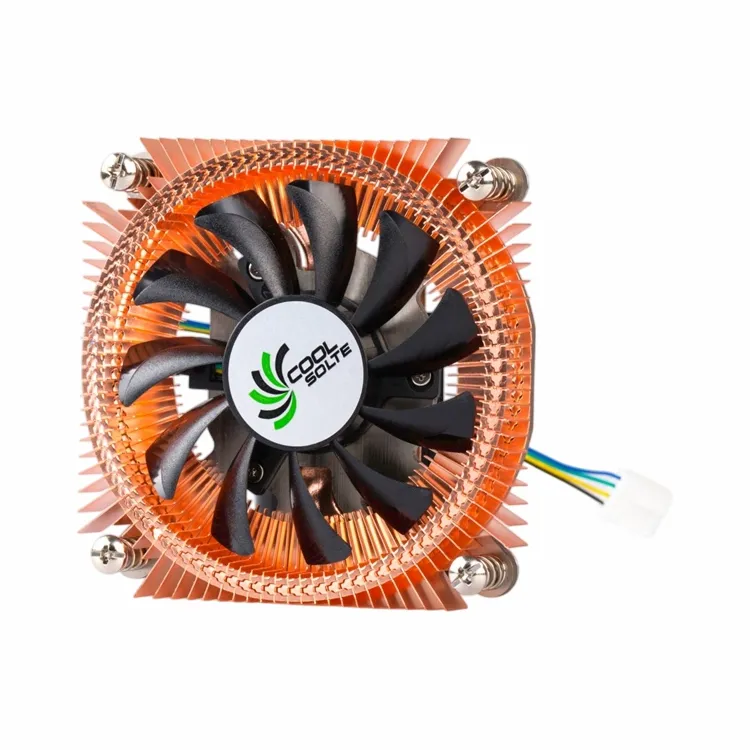
The performance of a copper heat sink starts to degrade well before reaching its melting point. At high temperatures, the mechanical properties of copper can change. As the temperature rises, copper becomes softer, which can lead to structural deformation. This deformation can reduce the contact area between the heat sink and the heat source, thereby decreasing the heat - transfer efficiency.
Practical Temperature Limits in Different Applications
CPU Cooling
In the field of CPU cooling, copper heat sinks are widely used. CPUs typically operate within a temperature range of 30 - 80°C under normal load. Under heavy load, such as during gaming or video editing, the temperature can rise to 90 - 100°C. Our CPU Heat Sink with Fin for Thermoelectric Cooling is designed to handle these typical CPU temperatures effectively.
However, continuous operation at temperatures above 100°C can be harmful to both the CPU and the heat sink. For copper heat sinks used in CPU cooling, a practical upper limit is often considered to be around 120 - 130°C. Beyond this temperature, the heat sink may start to experience significant thermal stress, and the thermal interface material between the CPU and the heat sink may also degrade, further reducing the cooling efficiency.
Industrial Electronics
In industrial electronics, the temperature requirements can be more demanding. Some industrial devices may generate a large amount of heat during operation. Copper heat sinks in these applications need to be able to handle higher temperatures.
Our Mini Computer Heat Sink for CPU Devices can be used in some industrial mini - computer setups. In industrial environments, the heat sink may be exposed to temperatures up to 150 - 180°C for short periods. But for long - term operation, it is recommended to keep the temperature below 150°C to ensure the longevity and reliability of the heat sink.
High - Power LED Lighting
High - power LED lights also generate a significant amount of heat. Copper heat sinks are used to dissipate this heat and maintain the LED's performance and lifespan. LEDs typically operate at temperatures between 60 - 80°C. Our heat sinks can handle these temperatures comfortably. However, if the temperature exceeds 100 - 120°C, the light output of the LED may start to decrease, and the color quality may also be affected.
Factors Affecting the Temperature Handling Capacity
Surface Area
The surface area of a copper heat sink is crucial for heat dissipation. A larger surface area allows for more heat to be transferred to the surrounding air. Heat sinks with fins or other surface - enhancing features can increase the surface area significantly. For example, our CPU Cooling Fan with Heatsink combines a heat sink with a fan. The fan helps to increase the airflow over the heat sink's surface, which in turn improves the heat - dissipation rate.
Airflow
Proper airflow is essential for a copper heat sink to function effectively. In a well - ventilated environment, the heat sink can transfer heat to the air more efficiently. If the airflow is restricted, the heat will accumulate around the heat sink, causing the temperature to rise. This is why in many applications, fans are used in conjunction with heat sinks to ensure adequate airflow.
Thermal Interface Material
The thermal interface material (TIM) between the heat sink and the heat source also affects the temperature - handling capacity. A good TIM can fill in the microscopic gaps between the two surfaces, improving the heat - transfer efficiency. Silicone - based and metal - based TIMs are commonly used. The quality of the TIM can determine how well the heat is transferred from the heat source to the heat sink.
Ensuring Optimal Performance
To ensure that our copper heat sinks perform optimally, we conduct rigorous testing. We test our heat sinks under different temperature and load conditions to simulate real - world scenarios. This allows us to accurately determine their performance and recommend the appropriate operating temperature ranges for different applications.
We also provide detailed installation instructions to ensure that the heat sink is installed correctly. Proper installation, including applying the right amount of thermal interface material and ensuring a good mechanical connection, is crucial for maximizing the heat - transfer efficiency.
Contact Us for Your Heat Sink Needs
If you are in the market for high - quality copper heat sinks, we are here to help. Our team of experts can assist you in selecting the right heat sink for your specific application, taking into account factors such as temperature requirements, size, and airflow. Whether you are a CPU manufacturer, an industrial electronics company, or a lighting designer, we have the products and knowledge to meet your needs. Contact us to start a discussion about your heat - sinking requirements and let us help you find the best solution.
References
- Incropera, F. P., DeWitt, D. P., Bergman, T. L., & Lavine, A. S. (2007). Fundamentals of Heat and Mass Transfer. Wiley.
- Touloukian, Y. S., & Ho, C. Y. (1970). Thermophysical Properties of Matter: The TPRC Data Series. Plenum Press.