

When it comes to building or upgrading a computer, one crucial component that often gets overlooked is the CPU cooler. A good CPU cooler not only ensures the stability and longevity of your processor but also allows it to perform at its best. As a leading supplier of the best budget CPU coolers, we understand the importance of finding a balance between cost - effectiveness and cooling performance. In this blog, we'll explore the cooling capacity of budget CPU coolers and how our products can meet your needs.
Understanding Cooling Capacity
The cooling capacity of a CPU cooler refers to its ability to dissipate heat generated by the central processing unit. It is typically measured in watts (W). A higher cooling capacity means the cooler can handle more heat, which is essential for high - performance CPUs that generate a significant amount of thermal energy during operation.

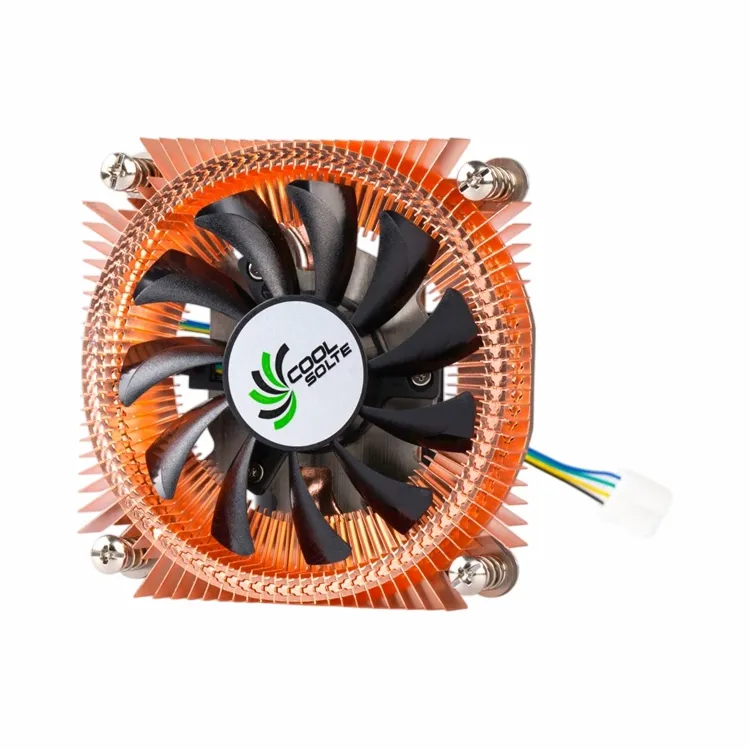
The cooling capacity of a cooler is determined by several factors, including the design of the heatsink, the size and speed of the fan, and the quality of the thermal interface material (TIM). A well - designed heatsink with a large surface area can transfer heat more efficiently from the CPU to the surrounding air. A high - speed fan can increase the airflow over the heatsink, enhancing the cooling effect. And a good TIM can reduce the thermal resistance between the CPU and the heatsink, allowing heat to transfer more smoothly.
Cooling Capacity of Budget CPU Coolers
Budget CPU coolers are designed to provide adequate cooling performance at an affordable price. While they may not have the same high - end features as premium coolers, they can still offer sufficient cooling for most mainstream CPUs.
Most budget CPU coolers have a cooling capacity ranging from 50W to 150W. This is generally sufficient for entry - level and mid - range CPUs, which typically generate between 35W and 100W of heat under normal operating conditions. For example, an Intel Core i3 or AMD Ryzen 3 series CPU usually has a thermal design power (TDP) of around 65W, which can be easily handled by a budget cooler with a cooling capacity of 80W or more.
However, if you have a high - end CPU, such as an Intel Core i9 or AMD Ryzen 9 series, which can have a TDP of over 100W, you may need a cooler with a higher cooling capacity. In such cases, you might need to consider spending a bit more on a cooler with a cooling capacity of 150W or above.
Our Budget CPU Cooler Products
As a supplier of the best budget CPU coolers, we offer a range of products that provide excellent cooling performance at an affordable price.
- Mini Computer Heat Sink for CPU Devices: Our Mini Computer Heat Sink for CPU Devices is designed for small - form - factor computers. It has a compact design that allows it to fit into tight spaces while still providing efficient cooling. With a cooling capacity of up to 80W, it is suitable for most entry - level and mid - range CPUs used in mini PCs.
- CPU Cooling Fan with Heatsink: The CPU Cooling Fan with Heatsink is a popular choice for mainstream desktop computers. It combines a high - speed fan with a large - surface - area heatsink to provide effective cooling. This cooler has a cooling capacity of up to 120W, making it suitable for mid - range CPUs with a TDP of up to 100W.
- CPU Heat Sink with Fin for Thermoelectric Cooling: Our CPU Heat Sink with Fin for Thermoelectric Cooling uses advanced thermoelectric technology to enhance the cooling performance. The fins on the heatsink increase the surface area for heat dissipation, and the thermoelectric module can actively cool the CPU. This cooler has a cooling capacity of up to 150W, making it suitable for high - performance CPUs.
Factors Affecting Cooling Capacity in Real - World Use
In real - world use, the actual cooling capacity of a CPU cooler can be affected by several factors.
- Overclocking: If you overclock your CPU, it will generate more heat than its rated TDP. In this case, you will need a cooler with a higher cooling capacity to keep the CPU temperature under control. For example, if you overclock an AMD Ryzen 5 CPU from its stock TDP of 65W to 80W, you may need a cooler with a cooling capacity of at least 100W.
- Ambient Temperature: The temperature of the surrounding environment can also affect the cooling performance of the CPU cooler. In a hot room, the cooler will have to work harder to dissipate heat, which may reduce its effective cooling capacity. It is recommended to keep your computer in a well - ventilated area with a moderate ambient temperature.
- Dust and Debris: Over time, dust and debris can accumulate on the heatsink and fan of the CPU cooler, reducing the airflow and heat dissipation efficiency. Regular cleaning of the cooler can help maintain its cooling capacity.
Choosing the Right Budget CPU Cooler
When choosing a budget CPU cooler, you need to consider the following factors:
- CPU Compatibility: Make sure the cooler is compatible with your CPU socket type. Different CPUs have different socket designs, and not all coolers will fit every socket.
- Cooling Capacity: Determine the TDP of your CPU and choose a cooler with a cooling capacity that is equal to or greater than the CPU's TDP. This will ensure that the cooler can effectively dissipate the heat generated by the CPU.
- Size and Space: Consider the size of the cooler and the available space in your computer case. Some coolers are very large and may not fit in a small - form - factor case.
Conclusion
In conclusion, the cooling capacity of a budget CPU cooler is an important factor to consider when building or upgrading your computer. While budget coolers may not offer the same high - end performance as premium models, they can still provide sufficient cooling for most mainstream CPUs. Our range of budget CPU coolers, including the Mini Computer Heat Sink for CPU Devices, CPU Cooling Fan with Heatsink, and CPU Heat Sink with Fin for Thermoelectric Cooling, offer a great balance between cost - effectiveness and cooling performance.
If you are interested in our budget CPU cooler products and would like to discuss procurement details, please feel free to reach out to us. We are more than happy to assist you in finding the right cooler for your needs.
References
- "Computer Hardware: A Complete Guide" by Andrew Tanenbaum
- "Thermal Management in Electronic Systems" by Jeffrey S. Kraus