

Hey there! I'm a supplier for a heat sink company, and today I'm gonna take you behind the scenes to explore the production facilities of a heat sink company. Heat sinks are crucial components used in various electronic devices to dissipate heat and ensure their proper functioning. So, let's dive right in and check out what goes on in those production facilities.
Raw Material Storage
First up, we've got the raw material storage area. This is where all the materials needed to make heat sinks are kept. The most common materials for heat sinks are aluminum and copper. Aluminum is popular because it's lightweight, cost - effective, and has good thermal conductivity. Copper, on the other hand, has even better thermal conductivity but is more expensive.
In this storage area, you'll see big rolls of aluminum sheets or large copper bars neatly stacked. These materials are carefully inspected upon arrival to make sure they meet the quality standards. Any sub - standard materials are sent back to the suppliers. This step is super important because the quality of the raw materials directly affects the performance of the final heat sink product.
Cutting and Shaping Machines
Once the raw materials are approved, they're moved to the cutting and shaping area. Here, we have a bunch of high - tech machines. There are laser cutting machines that can precisely cut the aluminum or copper sheets into the right sizes. Laser cutting is great because it's very accurate and can create complex shapes.
We also have CNC (Computer Numerical Control) machines. These bad boys can shape the heat sinks according to the design specifications. Whether it's creating fins, grooves, or holes, the CNC machines can do it all. They're controlled by computer programs, so the shapes are consistent and precise every time. For example, if we're making a Black Anodized Aluminum Heat Sink for CPU, the CNC machine will carefully shape the fins to maximize the surface area for heat dissipation.
Machining and Finishing
After the initial cutting and shaping, the heat sinks go through a machining process. This involves further refining the surfaces and edges. We use milling machines to smooth out any rough spots and ensure that the dimensions are within the tolerance limits.
Once the machining is done, it's time for finishing. There are different finishing processes depending on the requirements. One common process is anodizing. Anodizing creates a protective layer on the surface of the aluminum heat sink, making it more resistant to corrosion and giving it a nice, sleek look. For example, the black anodized finish on some heat sinks not only looks cool but also provides an extra layer of protection.
Assembly Area
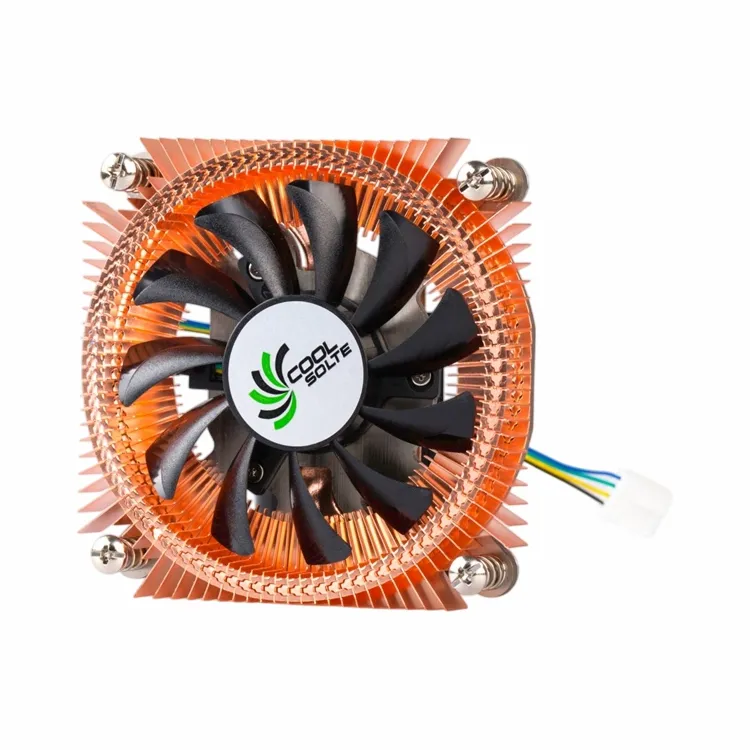
If the heat sink is part of a more complex cooling system, like a CPU Cooling Fan with Heatsink, it will be moved to the assembly area. Here, the fans, clips, and other components are attached to the heat sink.
The assembly process is done carefully to ensure that all the parts fit together perfectly. Workers use special tools to secure the components in place. They also perform some basic tests during the assembly to make sure everything is working as it should. For instance, they'll check if the fan spins freely and if it's properly aligned with the heat sink.
Quality Control Stations
Quality control is a big deal in a heat sink production facility. There are multiple quality control stations throughout the production process. At each station, the heat sinks are inspected for various parameters.
In the visual inspection area, workers use their eyes to look for any visible defects like scratches, dents, or uneven surfaces. They also check the dimensions using precision measuring tools. Any heat sinks that don't meet the standards are marked for re - work or discarded.
There are also thermal performance tests. We use specialized equipment to measure how well the heat sink dissipates heat. This is crucial because the main function of a heat sink is to transfer heat away from the electronic device. For example, when testing a CPU Heat Sink with Fin for Thermoelectric Cooling, we'll simulate the actual operating conditions of a CPU and measure the temperature drop across the heat sink.
Packaging Area
Once the heat sinks pass all the quality control tests, they're moved to the packaging area. Here, they're carefully wrapped in protective materials to prevent any damage during shipping. The packaging is designed to be both functional and informative. It usually includes details about the product, such as its model number, specifications, and usage instructions.
The heat sinks are then placed in boxes and labeled. The boxes are stacked on pallets and ready to be shipped out to our customers. We work with reliable shipping partners to ensure that the products reach our customers in a timely and safe manner.
R & D Department
In addition to the production areas, a good heat sink company also has an R & D (Research and Development) department. This is where the magic of innovation happens. The R & D team is constantly looking for new materials, designs, and manufacturing techniques to improve the performance of heat sinks.
They conduct a lot of research and experiments. For example, they might be looking into new alloys that have even better thermal conductivity than traditional aluminum or copper. They also work on optimizing the fin designs to increase the heat transfer efficiency. The R & D department plays a crucial role in keeping the company competitive in the market.
Conclusion
So, there you have it! That's a quick tour of the production facilities of a heat sink company. From the raw material storage to the final packaging, every step is carefully planned and executed to ensure that we produce high - quality heat sinks.
If you're in the market for heat sinks for your electronic devices, whether it's for a CPU, GPU, or other components, we've got you covered. Our heat sinks are designed to meet the highest standards of performance and quality. We offer a wide range of products, including the ones I've mentioned earlier like the Black Anodized Aluminum Heat Sink for CPU, CPU Cooling Fan with Heatsink, and CPU Heat Sink with Fin for Thermoelectric Cooling.

If you're interested in learning more about our products or want to start a procurement discussion, don't hesitate to reach out. We're always happy to talk about how our heat sinks can meet your specific needs.
References
- "Thermal Management of Electronic Systems" by some well - known thermal engineering experts.
- Industry reports on heat sink manufacturing and technology trends.