

When it comes to cooling your CPU, you have a variety of options at your disposal. Two of the most popular choices are low profile All-In-One (AIO) coolers and air coolers. As a supplier of low profile AIO coolers, I've had the opportunity to closely examine and compare these two cooling solutions, especially in terms of their vibration levels. In this blog post, I'll delve into how the vibration level of a low profile AIO cooler stacks up against that of an air cooler.
Understanding Vibration in Cooling Systems
Before we compare the two, it's important to understand why vibration matters in a cooling system. Vibration can have several implications. First, excessive vibration can lead to noise, which can be a nuisance, especially in quiet environments like an office or a bedroom. Second, over time, high levels of vibration can potentially cause physical wear and tear on components, leading to a shorter lifespan. Finally, in some cases, vibration can affect the stability of the cooler's installation, which may impact its cooling performance.
Vibration in Air Coolers
Air coolers are a tried-and-true method of cooling CPUs. They typically consist of a heatsink and one or more fans. The fans are responsible for moving air over the heatsink, dissipating the heat generated by the CPU. The vibration in an air cooler primarily comes from the fans.
When a fan spins, it can create an imbalance due to manufacturing tolerances, dust accumulation, or uneven airflow. This imbalance causes the fan to vibrate. The size, speed, and quality of the fan can all influence the level of vibration. Larger fans generally tend to vibrate less at the same speed compared to smaller fans because they have a larger moment of inertia. High-speed fans, on the other hand, are more likely to produce more vibration as they spin faster and generate more air movement.
The construction of the heatsink can also play a role in vibration. A poorly designed or lightweight heatsink may resonate with the fan's vibration, amplifying the overall noise and vibration level. Some air coolers, such as the Air Cooler Fans Cooling Heat Sink for CPU, are designed with features to minimize vibration, like rubber mounts for the fans or a sturdy heatsink construction. However, even with these features, air coolers can still produce a noticeable amount of vibration, especially under heavy load when the fans spin at high speeds.
Vibration in Low Profile AIO Coolers
Low profile AIO coolers are a relatively newer addition to the CPU cooling market. They combine the benefits of liquid cooling with a compact form factor, making them suitable for small form factor PCs. A low profile AIO cooler consists of a pump, a radiator, and one or more fans.
The pump is the main source of vibration in an AIO cooler. The pump circulates the coolant through the system, and its operation can generate some vibration. However, modern AIO coolers are designed with advanced pump technologies to minimize this vibration. For example, many pumps use a magnetic bearing design, which reduces friction and vibration compared to traditional sleeve bearings.
The fans in a low profile AIO cooler also contribute to the vibration level. Similar to air coolers, the size, speed, and quality of the fans can affect the vibration. However, since low profile AIO coolers are often designed for quiet operation, the fans are typically optimized for low noise and vibration. Additionally, the radiator in an AIO cooler can act as a dampener, absorbing some of the vibration generated by the pump and the fans.
Comparing Vibration Levels
In general, low profile AIO coolers tend to have lower vibration levels compared to air coolers. The advanced pump technologies used in AIO coolers help to reduce the vibration generated by the pump. Additionally, the radiator in an AIO cooler can absorb some of the vibration, further reducing the overall vibration level.
The fans in low profile AIO coolers are also often designed for low noise and vibration. They are typically larger in diameter and spin at lower speeds compared to the fans in air coolers, which helps to reduce vibration. In contrast, air coolers rely solely on the fans for cooling, and the fans may need to spin at high speeds to provide adequate cooling, especially under heavy load. This can result in higher vibration levels.
However, it's important to note that the actual vibration level can vary depending on the specific models of the low profile AIO cooler and the air cooler. Some high-quality air coolers with advanced vibration-reducing features may have lower vibration levels than some lower-quality low profile AIO coolers. Therefore, it's essential to research and compare different models before making a purchase.
Other Factors to Consider
While vibration level is an important factor to consider when choosing a CPU cooler, it's not the only one. Other factors, such as cooling performance, size, noise level, and price, also need to be taken into account.
In terms of cooling performance, low profile AIO coolers generally offer better cooling than air coolers, especially for high-performance CPUs. The liquid cooling system in an AIO cooler can transfer heat more efficiently than the air cooling system in an air cooler. However, air coolers can still provide adequate cooling for most mid-range CPUs.
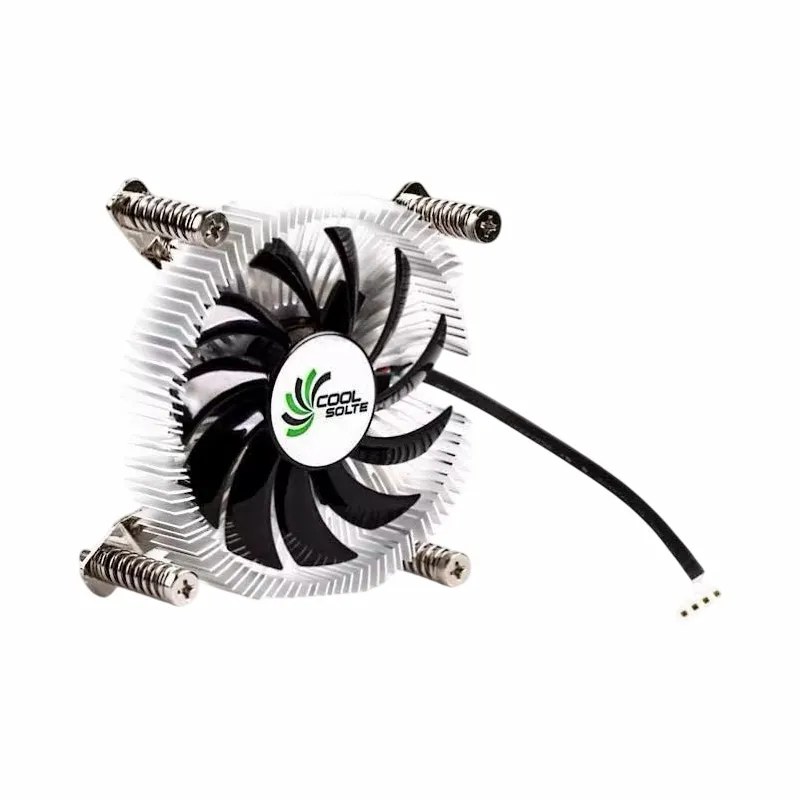

Size is another important consideration, especially if you have a small form factor PC. Low profile AIO coolers are designed to be compact, making them suitable for small cases. Air coolers, on the other hand, can be quite large, especially high-performance models, and may not fit in some cases.
Noise level is closely related to vibration level. In general, lower vibration levels result in lower noise levels. However, other factors, such as the fan design and the speed of the fans, can also affect the noise level. Both low profile AIO coolers and air coolers are available in quiet models, so it's important to choose a cooler that meets your noise requirements.
Finally, price is always a factor. Low profile AIO coolers are generally more expensive than air coolers. However, the additional cost may be worth it if you need better cooling performance, lower vibration and noise levels, or a compact form factor.
Conclusion
In conclusion, low profile AIO coolers typically have lower vibration levels compared to air coolers. The advanced pump technologies and the radiator in an AIO cooler help to reduce vibration, while the fans are often designed for low noise and vibration. However, the actual vibration level can vary depending on the specific models, so it's important to research and compare different options.
When choosing a CPU cooler, it's essential to consider other factors, such as cooling performance, size, noise level, and price, in addition to vibration level. By carefully evaluating your needs and comparing different models, you can choose the cooler that best suits your requirements.
If you're interested in learning more about our low profile AIO coolers or have any questions about CPU cooling, please don't hesitate to contact us for a procurement discussion. We're here to help you find the perfect cooling solution for your needs.
References
- Various technical specifications and reviews of CPU coolers from manufacturers and online technology websites.