

Hey there! As a supplier of mini PC CPU heat sinks, I've got a ton of knowledge about how these nifty little devices work. So, let's dive right in and explore the ins and outs of how a mini PC CPU heat sink does its thing.
First off, let's talk about why we even need a heat sink in the first place. A CPU, or central processing unit, is the brain of your computer. It's constantly working hard, performing all sorts of calculations and tasks. And like any hard - working machine, it generates heat. If this heat isn't dissipated properly, it can cause the CPU to overheat. Overheating can lead to all sorts of problems, like reduced performance, system crashes, and even permanent damage to the CPU. That's where the heat sink comes in.
The basic principle behind a heat sink is pretty simple: it's all about heat transfer. Heat always moves from a warmer object to a cooler one. In the case of a mini PC CPU, the CPU gets hot as it works, and the heat sink is designed to absorb that heat and transfer it away from the CPU.
Most mini PC CPU heat sinks are made from materials that are good conductors of heat. Aluminum is a popular choice because it's lightweight, relatively inexpensive, and has decent thermal conductivity. For example, our Black Anodized Aluminum Heat Sink for CPU is made from high - quality aluminum that can quickly absorb heat from the CPU.
The heat sink is usually placed in direct contact with the CPU. To ensure good heat transfer, a thermal paste is often applied between the CPU and the heat sink. The thermal paste fills in any tiny gaps between the two surfaces, allowing heat to flow more easily from the CPU to the heat sink.
Once the heat is absorbed by the heat sink, it needs to be dissipated into the surrounding air. This is where the design of the heat sink comes into play. Most heat sinks have fins. These fins increase the surface area of the heat sink. The larger the surface area, the more heat can be transferred to the air. Our CPU Heat Sink with Fin for Thermoelectric Cooling has a carefully designed fin structure that maximizes the surface area for efficient heat dissipation.
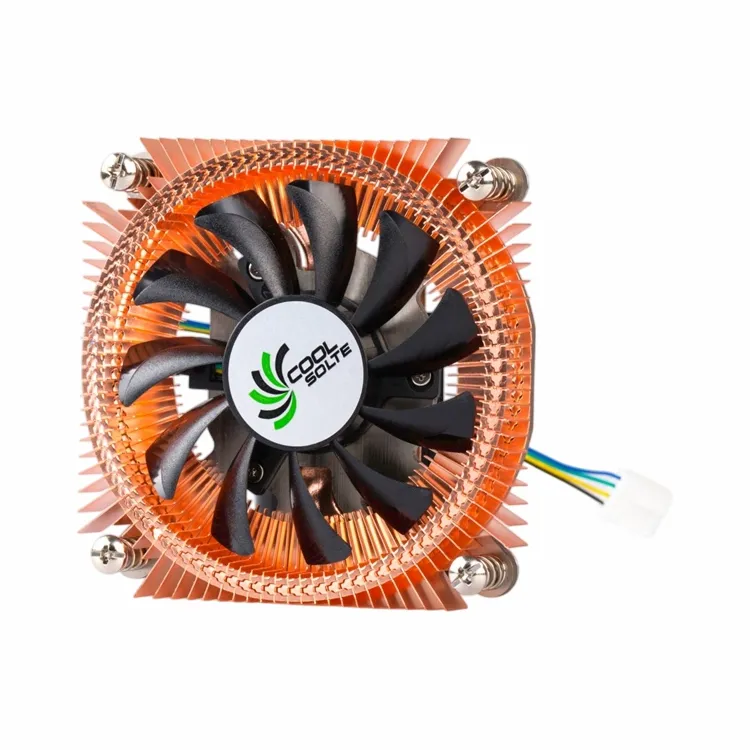

But just having fins isn't always enough. Sometimes, the heat transfer to the air is too slow on its own. That's when a fan comes in. A CPU cooling fan is often paired with the heat sink. The fan blows air over the fins of the heat sink, which speeds up the process of heat transfer to the air. The moving air carries the heat away from the heat sink and out of the mini PC. Our CPU Cooling Fan with Heatsink is a great example of a combined solution that provides effective cooling.
There are also other types of heat - dissipation methods. Some heat sinks use thermoelectric cooling, which uses the Peltier effect to transfer heat. In a thermoelectric cooler, an electric current is passed through a junction of two different materials, causing one side to get cold and the other side to get hot. This can be used to cool the CPU more effectively, especially in high - performance mini PCs where the CPU generates a lot of heat.
Now, let's talk about the importance of a well - functioning heat sink in a mini PC. Mini PCs are designed to be compact, which means there's less space for heat to dissipate. This makes the role of the heat sink even more crucial. A good heat sink can keep the CPU running at an optimal temperature, ensuring that your mini PC performs well and has a long lifespan.
When choosing a mini PC CPU heat sink, there are a few things to consider. First, you need to make sure it's compatible with your CPU. Different CPUs have different sizes and heat - generation rates, so you need a heat sink that can handle the specific requirements of your CPU. You also want to look at the thermal performance of the heat sink. This includes factors like its thermal conductivity, the design of the fins, and the efficiency of any cooling fans.
Another factor to consider is the noise level. Some cooling fans can be quite noisy, especially if they're running at high speeds. If you're using your mini PC in a quiet environment, like a home office, you might want to choose a heat sink with a fan that operates quietly.
As a supplier, we understand the importance of providing high - quality heat sinks. We test all our products to ensure they meet strict quality standards. Whether you're a DIY enthusiast building your own mini PC or a business looking to purchase heat sinks in bulk, we've got the right solution for you.
If you're interested in learning more about our mini PC CPU heat sinks or have any questions about which heat sink is right for your needs, don't hesitate to reach out. We're here to help you make the best choice for your mini PC cooling needs. Whether you need a simple aluminum heat sink or a more advanced thermoelectric cooling solution, we've got you covered. Contact us to start a procurement discussion and find the perfect heat sink for your project.
References
- "Thermal Management of Electronic Systems" by Avi Bar - Cohen
- "Fundamentals of Heat and Mass Transfer" by Frank P. Incropera, David P. DeWitt, Theodore L. Bergman, and Adrienne S. Lavine