

As a supplier of mini PC CPU heat sinks, I often get asked a crucial question: Can a mini PC CPU heat sink work without a fan? This query is not only relevant for tech enthusiasts building their own mini PCs but also for businesses looking to optimize their computing systems. In this blog, we'll delve into the science behind CPU cooling, the capabilities of mini PC CPU heat sinks, and whether they can function effectively without a fan.
The Basics of CPU Cooling
Before we answer the main question, it's essential to understand how CPUs generate heat and why cooling is necessary. A CPU, or central processing unit, is the brain of a computer. It performs billions of calculations per second, and this intense activity generates a significant amount of heat. If this heat is not dissipated properly, the CPU can overheat, leading to reduced performance, system instability, and even permanent damage.
The primary purpose of a CPU heat sink is to absorb the heat generated by the CPU and transfer it away from the processor. Heat sinks are typically made of materials with high thermal conductivity, such as aluminum or copper. They have a large surface area, usually in the form of fins, which increases the contact area with the surrounding air. This allows for more efficient heat transfer through a process called convection.
How Fans Enhance Cooling
Fans play a crucial role in the cooling process by increasing the airflow around the heat sink. When a fan blows air over the fins of a heat sink, it helps to carry away the heat more quickly. This forced convection significantly improves the cooling efficiency compared to natural convection, where the heat is transferred to the air without the help of a fan.
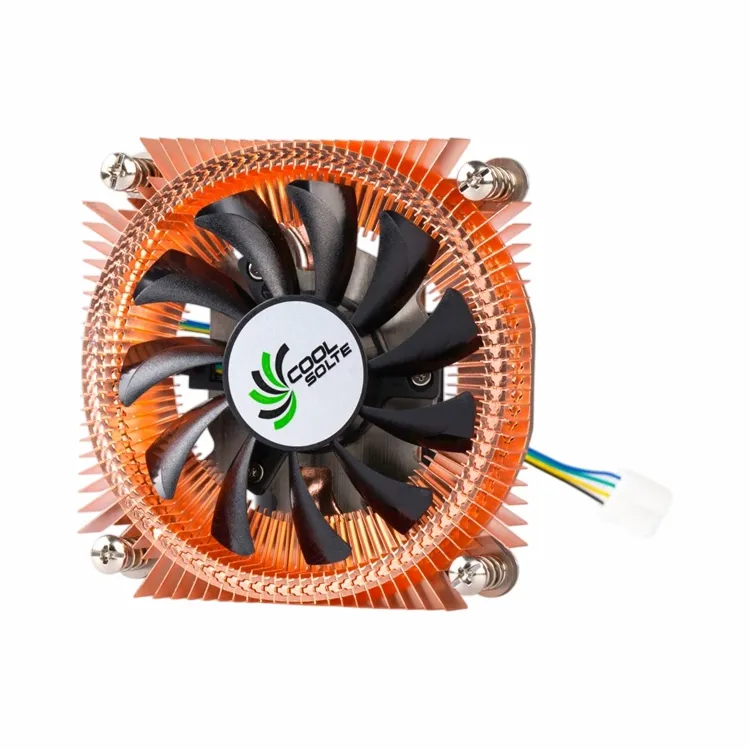
In a typical mini PC setup, a CPU cooling fan is mounted on top of the heat sink. The fan draws in cool air from the surroundings and blows it over the fins, expelling the hot air out of the system. This continuous flow of air helps to maintain a stable temperature for the CPU, ensuring optimal performance.
Can a Mini PC CPU Heat Sink Work Without a Fan?
The short answer is yes, a mini PC CPU heat sink can work without a fan. However, several factors determine its effectiveness in doing so.
Heat Generation of the CPU
The amount of heat generated by the CPU is a critical factor. Low-power CPUs, such as those found in some entry-level mini PCs, produce relatively little heat. In these cases, a well-designed heat sink may be able to dissipate the heat through natural convection alone. For example, some mini PCs with Intel Celeron or Pentium processors have heat sinks that can keep the CPU cool without the need for a fan.
Design and Size of the Heat Sink
The design and size of the heat sink also play a significant role. A larger heat sink with more fins and a greater surface area will have more efficient heat dissipation. Additionally, the material used in the heat sink can affect its performance. Copper, for instance, has a higher thermal conductivity than aluminum, which means it can transfer heat more effectively.
Some advanced heat sinks, such as the CPU Heat Sink with Fin for Thermoelectric Cooling, are specifically designed to maximize heat transfer without the need for a fan. These heat sinks often incorporate innovative fin designs and materials to enhance natural convection.
Ambient Temperature
The ambient temperature of the environment where the mini PC is located can also impact the performance of a fanless heat sink. In a cool environment, the heat sink will have an easier time dissipating heat. However, in a hot room or a confined space with poor ventilation, the heat sink may struggle to keep the CPU cool without a fan.
Advantages of Fanless Heat Sinks
There are several advantages to using a fanless heat sink in a mini PC.
Quiet Operation
One of the most significant benefits is the quiet operation. Fans can produce a significant amount of noise, especially when they are running at high speeds. A fanless heat sink eliminates this noise, making it ideal for environments where silence is crucial, such as home theaters or offices.
Reliability
Fans have moving parts, which means they are more prone to failure over time. A fanless heat sink has no moving parts, making it more reliable and less likely to require maintenance or replacement.
Energy Efficiency
Without a fan consuming power, a fanless heat sink can help reduce the overall energy consumption of the mini PC. This is not only beneficial for the environment but also for reducing electricity costs.
Limitations of Fanless Heat Sinks
While fanless heat sinks have their advantages, they also have some limitations.
Limited Cooling Capacity
As mentioned earlier, fanless heat sinks rely on natural convection, which is less efficient than forced convection. This means that they have a limited cooling capacity and may not be suitable for high-performance CPUs that generate a large amount of heat.
Higher CPU Temperatures
Without a fan to enhance the airflow, the CPU temperatures may be higher compared to a setup with a fan. This can lead to reduced performance and potentially shorten the lifespan of the CPU.

Applications of Fanless Heat Sinks
Despite their limitations, fanless heat sinks are well-suited for certain applications.
Home and Office Use
For basic computing tasks such as web browsing, word processing, and media playback, a fanless heat sink can provide sufficient cooling. Many home and office users prefer the quiet operation and reliability of fanless mini PCs.
Industrial and Embedded Systems
In industrial and embedded systems, where space is limited and reliability is crucial, fanless heat sinks are often the preferred choice. These systems typically have low-power CPUs and operate in controlled environments, making them suitable for fanless cooling solutions.
Our Mini PC CPU Heat Sink Products
As a supplier of mini PC CPU heat sinks, we offer a wide range of products to meet the diverse needs of our customers. Our Mini Computer Heat Sink for CPU Devices is designed to provide efficient cooling for low-power CPUs. It features a compact design and high-quality materials to ensure reliable performance.
For those who need a combination of a heat sink and a fan, we also offer the CPU Cooling Fan with Heatsink. This product provides enhanced cooling for high-performance CPUs, ensuring optimal performance even under heavy loads.
Contact Us for Purchasing
If you're interested in our mini PC CPU heat sink products or have any questions about fanless cooling solutions, we'd love to hear from you. Whether you're a tech enthusiast building your own mini PC or a business looking to optimize your computing systems, our team of experts can provide you with the information and support you need. Contact us today to discuss your requirements and explore our range of products.
References
- "Thermal Management of Electronics" by Ali Mehrabian
- "Heat Transfer" by Yunus A. Cengel