

Yo, folks! I'm a supplier of copper heat sinks, and today I wanna chat about whether copper heat sinks are prone to mechanical damage.
Let's start with a bit of background. Copper heat sinks are pretty popular in the cooling game. They're known for their excellent thermal conductivity, which means they can transfer heat away from a hot component, like a CPU, really efficiently. This makes them a go - to choice for a lot of applications where heat management is crucial.
Now, when it comes to mechanical damage, there are a few factors we need to consider. First off, the nature of copper itself. Copper is a relatively soft metal compared to some others. It has a Mohs hardness of around 3, which is softer than metals like steel (which can have a hardness of 4 - 4.5 on the Mohs scale). This softness can be a double - edged sword.
On one hand, it allows copper to be easily shaped into complex heat sink designs. We can create all sorts of fin shapes and configurations to maximize the surface area for heat dissipation. For example, we can make the thin, delicate fins that you often see in high - performance heat sinks. But on the other hand, this softness also means that copper heat sinks can be more vulnerable to scratches and dents.
Let's talk about the different types of mechanical damage that copper heat sinks might face. One common type is impact damage. If a copper heat sink gets dropped or banged against something hard, there's a good chance it'll get dented. A dent might not seem like a big deal at first glance, but it can actually affect the heat sink's performance. The dent can disrupt the smooth flow of air over the heat sink's surface, reducing its ability to transfer heat effectively.
Another type of mechanical damage is abrasion. When the heat sink is in contact with other components or is being installed and removed repeatedly, it can get scratched. These scratches can also interfere with the air flow and, in some cases, expose the underlying copper to oxidation. Oxidation can further reduce the heat sink's thermal conductivity over time.
But it's not all doom and gloom. There are ways to protect copper heat sinks from mechanical damage. One option is to use protective coatings. Some coatings can not only make the heat sink more resistant to scratches and abrasions but also prevent oxidation. For instance, a thin layer of nickel plating can be applied to the copper heat sink. Nickel is harder than copper and can act as a barrier against physical damage and corrosion.

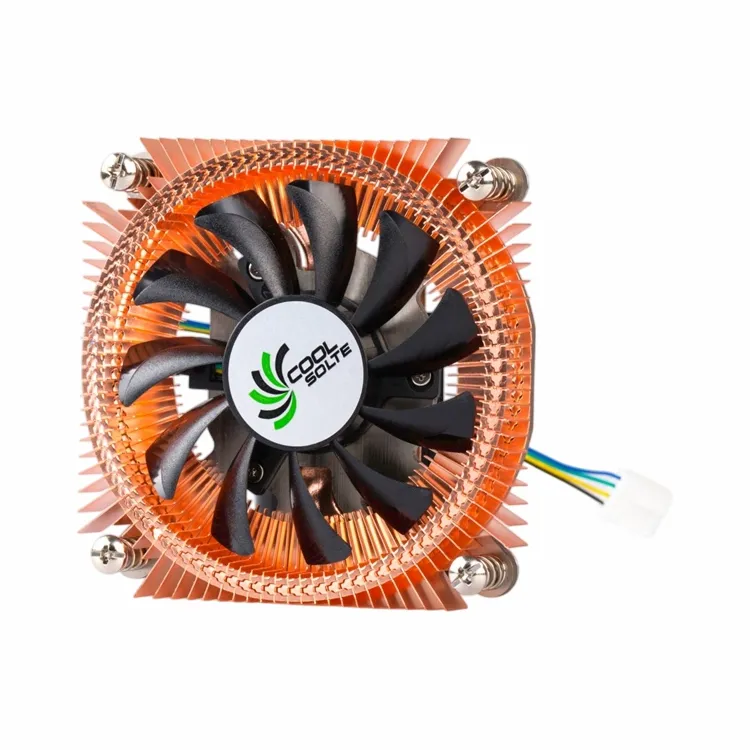
Now, let's compare copper heat sinks to some other types of heat sinks in terms of mechanical damage. Take aluminum heat sinks, for example. Aluminum is also a popular choice for heat sinks because it's lightweight and relatively inexpensive. It's a bit harder than copper, with a Mohs hardness of around 2.75 - 3. But it also has a lower thermal conductivity compared to copper.
When it comes to mechanical damage, aluminum heat sinks are generally more resistant to dents than copper ones. However, they can still be scratched, especially if they're made with a thin - walled design. You can check out our Black Anodized Aluminum Heat Sink for CPU for an example of an aluminum heat sink that's designed to be durable and efficient.
Then there are heat sinks with fins for thermoelectric cooling. Our CPU Heat Sink with Fin for Thermoelectric Cooling is a great example. These heat sinks often have very fine fins, which can be fragile in both copper and aluminum versions. The fine fins are designed to increase the surface area for better heat transfer, but they can be easily damaged if not handled carefully.
And let's not forget about CPU cooling fans with heatsinks, like our CPU Cooling Fan with Heatsink. The combination of a fan and a heat sink adds another layer of complexity. The fan can cause vibrations, which over time, can potentially lead to mechanical stress on the heat sink. If the heat sink is made of copper, these vibrations could contribute to the development of micro - cracks or loosen the fins.
In real - world applications, the risk of mechanical damage to copper heat sinks can vary depending on the environment. For example, in a desktop computer that's sitting on a stable desk, the risk of impact damage is relatively low. But in a server rack where there's a lot of movement and handling during maintenance, the risk is higher.
To minimize the risk of mechanical damage during shipping and handling, we take extra precautions. We use high - quality packaging materials to cushion the heat sinks and prevent them from getting banged around. And when it comes to installation, we provide clear instructions to ensure that the heat sinks are handled properly.
So, are copper heat sinks prone to mechanical damage? Well, they are more vulnerable than some other materials due to their softness. But with the right protective measures and proper handling, the risk can be significantly reduced.
If you're in the market for high - quality copper heat sinks or any of our other heat sink products, don't hesitate to reach out. We're here to provide you with the best cooling solutions for your needs. Whether you're building a high - end gaming PC or a large - scale server system, we've got the right heat sink for you. Let's start a conversation and see how we can work together to keep your components cool and running smoothly.
References
- "Materials Science and Engineering: An Introduction" by William D. Callister Jr. and David G. Rethwisch
- "Thermal Management of Electronic Systems" by Avram Bar - Cohen and Ali Boroushaki